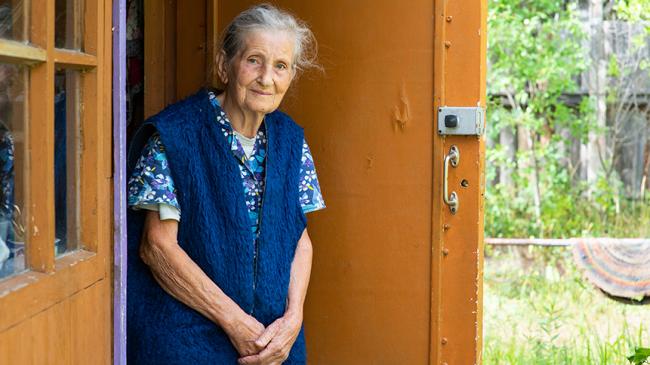


Polish society is ageing rapidly. The proportion of older people in the population has risen from around 17% in 2005 to over 26% in 2024, and according to forecasts, by 2060 seniors will account for over 38% of the country’s population. The need for assistance increases with age – after reaching the age of 80, dependence on the support from others rises significantly, and amongst those over 90, the majority of older people require help. The situation is particularly challenging in rural areas, where the population is ageing more rapidly, and the migration of young people means that more seniors are living alone. Access to social services in rural areas is hampered by, for example, transport exclusion, the uneven distribution of infrastructure, a failure to assess residents’ needs, and psychological barriers faced by senior citizens (distrust, shame, passivity). Despite a statutory obligation, many local authorities do not provide all forms of support: care services, specialist care services or neighbourhood assistance. Most older people wish to remain in their own homes for as long as possible, which promotes their independence, activity and well-being. It is therefore essential to develop local care services and day-care support, such as senior citizens’ homes and clubs.
The provision and funding of care for seniors is the responsibility of municipalities, supported by government programmes, including Care 75+, the Senior Citizens’ Support Corps, Personal Assistant for People with Disabilities for Local Government Units, and Senior+. These programmes are designed to increase the availability of services and ease the burden on local government budgets. Those using such services are required to pay a fee for them, based on a municipal council resolution setting out the detailed conditions for the provision of and payment for services, as well as the detailed conditions for partial or full exemption from fees and the procedure for collecting them. For those exempt from payment, the cost of the services provided is covered by the municipality.
In view of the growing scale of this social problem, the Supreme Audit Office, following a suggestion put forward by the Sejm Committee on Senior Citizens’ Policy, launched, in 2025, an audit of care for older people in rural and urban-rural municipalities, covering the most important forms of support provided in the home and in day centres.
The audit covered five forms of care for older people, namely care services in the home, specialist care services, care services in the home in the form of neighbourhood assistance, personal assistance services provided under the Personal Assistant for People with Disabilities for Local Government Units programme, and support in Senior+ Day Centres and Senior+ Clubs provided under the multi-annual Senior+ programme.
Key findings of the audit
Between 2022 and the first half of 2025, the proportion of people aged over 60 in the population of each of the municipalities examined rose steadily, ranging from around 20% to almost 30% of residents. Despite the ageing population, only 9 out of the 19 municipalities audited had separate programmes targeted at seniors. The remaining municipalities addressed issues related to older people within their strategies for tackling social problems, which included objectives concerning this group. Although social assessments were carried out prior to the drafting of these documents, they did not include projections of the number of older people requiring support nor a systematic analysis of their needs.
The lack of a systematic approach to identifying the needs of senior citizens meant that social care centres focused mainly on those already receiving support. The circumstances of older people not on the registers – particularly those living alone, who may require support in the future – were neither identified nor monitored. Nor did the centres usually analyse the situation of seniors living on the upper floors of buildings without lifts. None of the audited organisations had developed a system for identifying elderly people living alone, nor did they maintain a separate database on their life situation. Information on senior citizens was obtained solely through standard community interviews, and centre managers indicated that current regulations do not impose an obligation to collect data on loneliness or social isolation. Consequently, people in need may not receive assistance, as the centres only take action once a senior has been reported by a family member, a neighbour, the police, a healthcare facility, an ambulance service, or has reported the matter themselves. The social care centres audited, which provided support in the place of residence, covered, on average, just over 5% of older people living in a given municipality. Care was most frequently granted to people aged over 80 – around 10% of them received support. There were slightly fewer recipients among younger seniors, with around 4% aged 70–79 and around 2% aged 60–69. The centres audited did not refuse to provide in-home support to older people. Information on the need for support came mainly from the individuals concerned themselves or was obtained from them by social workers. In this context, however, it should be noted that one of the centres had concluded a cooperation agreement with the Seniors’ Council, aimed, in particular at identifying and assessing the needs of people aged 60 and over living within the municipality, as well as understanding their expectations in various areas of life, and improving the flow of information between the local community and support organisations. Nevertheless, this cooperation was not documented in any way. In the NIK’s opinion, this is a valuable initiative and an example of good practice.
Ex officio assistance was provided only in emergency situations when the person in need was unable to make a decision. Following a social assessment, benefits were usually granted immediately; however, some municipalities pointed out that it was not possible to provide care for all elderly people in need.
Home care and additional forms of support for seniors
In all the municipalities audited, the number of people receiving care in their own homes rose steadily. Care services were offered, some of which were funded by the European Union. Neighbourhood and specialist services were used less frequently, mainly due to a lack of interest among residents. Older people could also make use of personal assistance services, support from the Senior+ Day Centre or the Senior+ Club, whilst in many municipalities transport, the Handyman for Older Citizens service, rehabilitation equipment hire schemes and additional forms of support, such as psychological counselling and a helpline, were also provided.
Under the Social Assistance Act, care services are available to a person living alone who, due to age, illness or other reasons, requires assistance from others and is deprived of it. These services are one of the most commonly chosen forms of support for older people, as they enable them to remain in their own homes and cover a wide range of assistance with daily living, from personal care, hygiene, nutrition and household tasks to organisational support. In the four centres audited, internal standards for the provision of these services had been introduced, which – in the opinion of the Supreme Audit Office (NIK) – improves their quality, facilitates the assessment of carers’ work and increases the transparency of expectations regarding the assistance provided. In all the cases examined, the allocation of services was preceded by a properly conducted social welfare interview, based on which an individual support plan tailored to the elderly person’s needs was drawn up. Some people were also offered additional forms of assistance, such as specialist counselling or support with administrative procedures. At the same time, in some centres, irregularities were found in the documentation of administrative decisions, consisting of imprecise definitions of the scope, location and timing of service provision, which made it difficult to monitor their implementation and verify whether they overlapped with other forms of support funded from public funds. In those cases where verification was possible, the activities undertaken during the provision of support were consistent with the agreed scope; however, in six centres, the nature of the tasks carried out was not specified, so it was not possible to make a reliable assessment of the correctness of the services.
Specialist care services provided in the home were available in 7 out of the 19 municipalities audited and were mainly delivered under the Care 75+ programme and projects funded by the European Union, meaning they were either free of charge or subject to a partial fee. In all the cases examined, social welfare interviews were performed correctly, the needs of older people were assessed, and individual care plans were drawn up, covering primarily rehabilitation and the improvement of bodily functions, as well as other forms of support, such as psychological counselling. The services were provided by staff with the required qualifications. However, there were delays in concluding contracts with voivodes for the implementation of the Care 75+ programme, which in some cases led to several-month-long interruptions in the provision of services at the beginning of the year.
The newest form of care in the place of living, in operation since November 2023, are care services provided in the form of neighbourhood support, i.e. services comprising assistance with meeting basic daily needs, basic hygiene and personal care – which should be understood as forms of support not requiring specialist knowledge or skills – and, where necessary and possible, facilitating contact with the wider community. These services were offered by 13 of the 19 centres audited, with 11 of them funded through the Senior Citizens’ Support Corps programme. It should be noted that contracts for the provision of services under this programme between voivodes and municipalities were concluded only in the middle of the year. Although these delays did not cause problems given the small number of people using this form of support, in the event of greater demand they could lead to financial difficulties for municipalities, which would be forced to temporarily cover the costs of the services from their own funds whilst awaiting reimbursement.
Personal assistance services provided under the Personal Assistant for People with Disabilities for Local Government Units programme were provided in all 19 municipalities where the audit was carried out. Over a three-year period from 2022, the number of people aged 60 and over, using the services of personal assistants more than doubled (from 201 to 466). The highest number of seniors used personal assistance services in the three audited local government units in the Świętokrzyskie Voivodship. In five municipalities, additional regulations were introduced concerning the organisation of services, particularly in the event of high demand or shortage of assistants. Support was provided exclusively to those eligible who held a certificate of severe or moderate level of disability. Before assistance was granted, the senior’s situation was assessed, and an individual support plan was drawn up. The audit revealed no irregularities, such as the simultaneous care of several people the exceeding of hourly or cost limits, or the failure to utilise the allocated support hours.
Funding and organisation of support for seniors
Running care centres, referring people in need of care to these centres and providing places in them, are among the municipality’s responsibilities. Support provided under the Senior+ Multi-Annual Programme was delivered by 16 out of 19 municipalities (84.2%) where the audit was carried out. Senior+ Day Centres operated in seven municipalities and Senior+ Clubs in 11, with two of these municipalities operating both Senior+ Day Centres and Senior+ Clubs. In one municipality, such a facility was not established, despite plans to do so. In another municipality, the facility was closed, but the three-year sustainability period for the project, as set out in the Senior+ Programme for 2015–2020, was maintained. Local authorities are obliged to maintain the operation of Senior+ centres and the declared places for at least three years after the completion of the project. However, the regulations and agreements do not specify whether the existing number of hours of activities must also be maintained during this period (in one of the municipalities, the number of hours of activities for senior citizens was halved during the project’s duration, from 20 to 10 hours per week).
In connection with the new programme for 2026–2030 (Active Seniors – ASY), the NIK highlights the need to clarify the concept of ‘sustainability’. The lack of specific guidelines allows for drastic reductions in the range of services on offer (even down to 1 hour per week), which may have a negative impact on the physical and mental well-being of older people. Under the current rules, the sustainability of the programme’s implementation will be maintained even in such cases.
During the audit, it was found that in seven municipalities, participation in Senior+ Clubs was free of charge for older people. In the case of those applying for care at Day Centres and Senior+ Clubs, the seniors’ situations were correctly assessed, the required social welfare interviews were performed, diagnoses and support plans were drawn up. The services offered included, e.g. social, educational, cultural, recreational, physical activity and therapeutic support. All facilities met the minimum standards for premises; however, in one of them, no physiotherapist was employed throughout the entire audit period due to a lack of funding. The NIK pointed out that the delayed transfer of funding to local authorities (in the second half of the year) hinders the timely recruitment of specialists, limits the continuity of care for seniors and prevents effective planning of activities, which has a negative impact on the quality and stability of the services provided.
Between 2022 and the first half of 2025, the audited municipalities systematically increased their expenditure on care for older people. The largest amount, approximately PLN 34.3 million, was allocated to the running of day centres and self-help clubs, of which around PLN 4.9 million came from the multi-annual Senior+ programme. Approximately PLN 27 million was spent on care services provided in the home. During this period, 13 out of the 19 audited municipalities used Care 75+ programme, under which a total of over PLN 14 million was spent on supporting seniors (funds from the programme accounted for almost 53% of expenditure on care services for the elderly). All the municipalities covered by the audit obtained funding from the Personal Assistant for People with Disabilities for Local Government Units Programme to provide personal assistance services. These services were free of charge for older people. In turn, specialist care services in the senior’s own home were provided by 6 out of the 19 social welfare centres audited. A total of approximately PLN 1 million was spent on these services during the years covered by the audit. 13 of the 19 social welfare centres audited provided assistance in the form of neighbourhood care services, on which over PLN 500,000 was spent. The managers of the social welfare centres stressed that the available funds were insufficient in view of the growing number of senior citizens and their increasing care needs.
The audit revealed that only one centre had a formal procedure in place for supervising care services, whilst in a further five centres the monitoring arrangements were set out in standards or procedures. Although the managers of all units stated that they carried out ongoing supervision of the support provided, this was not usually documented. The effectiveness of the support was assessed at least once every six months when the social welfare interview was updated, and whenever there was a change in the senior’s living situation. A survey conducted by the Supreme Audit Office (NIK), in which 500 older people took part, showed that nearly 70% of respondents believed that the services they received had, to a significant extent, enabled them to remain in their own homes and avoid the need for round-the-clock residential care, with a total of around 75% giving a positive assessment of the impact of the support on their ability to live independently.
As part of the audit, information was obtained from all voivodes regarding the aforementioned forms of support for senior citizens provided between 2022 and 2025 (first half) by rural and urban-rural municipalities. The information shows that in 275 of these, i.e. over 12%, care services were not provided to older people in their own homes. In contrast, in 185 municipalities across all voivodships, seniors did not have the opportunity to access care services or specialist care services, nor care services in their own homes in the form of neighbourhood support, i.e. the services specified in the Social Assistance Act.
Percentage of rural and urban-rural municipalities in individual voivodships that do not offer home-based care services to older people, as provided for under the Social Assistance Act
Source: NIK analysis based on data obtained from voivodes
Conclusions and recommendations
In light of the audit findings, the Supreme Audit Office has submitted post-audit recommendations to the Minister for Family, Labour and Social Policy and the Head of the Prime Minister’s Office, calling for measures to be taken to:
- promote good practices related to the scope and manner of providing care services, as well as the qualifications of those providing them;
- establish, within the Multi-annual Programme for Older People Active Seniors – ASY for 2026–2030, principles for ensuring the continuity of the implementation of the Senior+ Day Centres and Senior+ Clubs initiative.
Home care is the form of support most sought after by older people. The organisation and provision of such care – in particular care services, specialist care services and neighbourhood-based care services – are mandatory responsibilities of the municipality. Consequently, a proposal has been put forward for municipalities to undertake ongoing measures aimed at assessing the life situation of seniors (including in terms of family circumstances, living conditions, income, health, and issues arising from the specific characteristics of the municipality in question), as well as taking action to provide support to those in need.