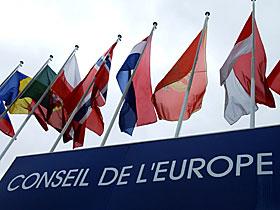


The Supreme Audit Office of Poland was appointed external auditor of the Council of Europe in course of a tender. The previous external auditors of the Council were SAIs of, among others, Great Britain and France. In 2013 NIK supported by the Polish Ministry of Foreign Affairs presented its offer to the Council of Europe. Other SAIs that responded to the invitation to tender were SAI Germany, Norway, Italy and Greece. The agreement specifying the terms of the audit was signed by President Krzysztof Kwiatkowski in Strasbourg in 2014. According to the document the Office will examine financial statements of the Council until 2018. Audit costs are covered by the Council of Europe. The audit is mainly aimed to analyse the correctness and reliability of the financial statements and the budget execution.
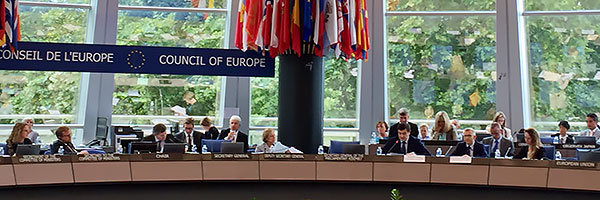
Apart from the financial matters the audit conducted by the Poles concerns the organisation of the Council, its aid programmes and performed tasks. This year, at a meeting of Ministers’ Deputies, NIK experts presented findings concerning the:
- pension scheme of the Council of Europe,
- safety of archives,
- HR IT management system;
- action plans for Ukraine and Armenia.
The Council of Europe is audited by a team of experienced NIK experts. Each year they face a challenge, because due to its complex mission, the Council elaborated a complicated structure of institutions, agencies, and offices throughout Europe.
The Council of Europe is an international organisation founded on 5 May 1949. It was established by 10 states - Belgium, Denmark, France, Ireland, Italy, Luxembourg, the Netherlands, Norway, Sweden and the UK which signed the Statute of the Council of Europe referred to as the London Treaty. Currently the Council of Europe brings together 47 member states, nearly twice as many as the European Union. It is based on over 200 international treaties. Basic goals of the Council include promotion and strengthening of three values: human rights, democracy and rule of law in Europe. The Council of Europe conducts broad activity in terms of creating new legal standards, developing member states’ cooperation in the field of law and reinforcing local democracy. It also remains active in the field of culture, education, support of youth, sport, cultural and natural heritage, intercultural dialogue, land use as well as social affairs, healthcare and migration. The Council of Europe is highly respected as an organisation promoting human rights, principles of law and democratic standards. Its hallmark are numerous conventions.
The Council is occupied not only with the protection of human rights, support of home rule and promotion of humanitarian values. It also fosters international cooperation in the fight against crime and money laundering, combats corruption, supports development of the most needy countries, sets standards for medical substances.
Ministers’ Deputies deal with the everyday activity of the Council of Europe. This body is constituted by ambassadors, permanent representatives acting on behalf of Ministers (who constitute the Committee of Ministers - the highest decision-making body of the Council). Poland is represented in the Ministers’ Deputies by Ambassador Janusz Stańczyk. The Deputies are supported by additional working groups, which prepare drafts of individual decisions.
Costs of the audit carried out by NIK are born by the Council of Europe. Auditors use the international methodology based on the ISSAI standards (International Standards of Supreme Audit Institutions). An additional value added for Poland is NIK’s involvement into several projects to the benefit of the states of the Eastern and Central-Eastern Europe.