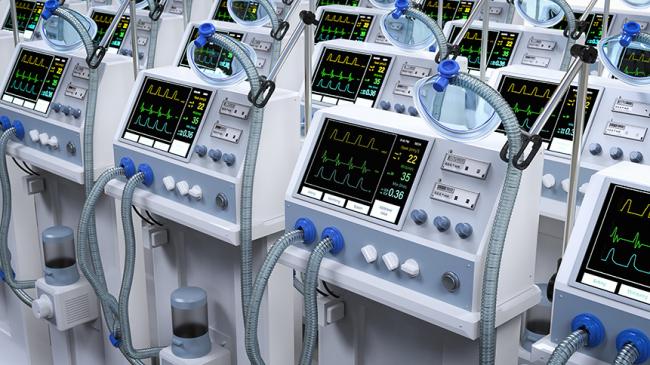


NIK has negatively evaluated the purchase and use of medical equipment and devices to control the COVID-19 epidemic. The purchases were excessive and thus partly wasteful. With regard to COVID-19, assets worth at least PLN 1.8 billion were purchased. After the epidemic ended, medical devices worth PLN 350 million at minimum were left unused in strategic reserves (over 19%). Besides, in the audited healthcare facilities approx. 14% of medical equipment obtained from strategic reserves also remained unused. Nevertheless, even after the state of epidemic emergency was lifted, the purchases of other specialist devices (worth approx. PLN 70 million) were continued under the pretext of COVID-19 control. At the same time, in view of the absence of clear principles, after the epidemic came to an end, it was not guaranteed that medical equipment and devices worth at least PLN 1.2 billion would be returned to strategic reserves, although their properties allowed them to be reused in case of other crisis situations. Another consequence was non-returnable transfer of medical equipment worth approx. PLN 65 million to healthcare facilities, without prior analysis of its usefulness.
Audit no. P/23/055/LKA
In the past years NIK has audited the activity of the state authorities with regard to the COVID-19 epidemic. One of the audits (P/20/062) revealed unjustified and uneconomic purchases of medical equipment and devices, e.g. incomplete, non-functional ventilators, which did not meet Polish requirements. In another audit (D/21/505) NIK identified delays in settling and managing equipment left after the liquidation of temporary hospitals.
Another audit of purchases related to the COVID-19 epidemic was needed because of their large scale and the absence of systemic mechanisms for estimating the demand and monitoring the use of purchased equipment, also after the epidemic. The auditees were: the Chancellery of the Prime Minister, the Ministry of Health, the Ministry of State Assets, the Government Agency for Strategic Reserves, seven provincial offices and seven hospitals.
Questionable legislation on strategic reserves
Strategic reserves are a crucial element of crisis management. Under the Act on Strategic Reserves they are created in case of an emergency, in particular pertaining to security, public health and order, natural disasters or crisis situations. They aim at supporting task performance in terms of the state’s security, alleviating disturbances in the continuity of deliveries serving the functioning of economy and satisfying citizens’ basic needs, also to save their health and life.
During the COVID-19 epidemic the system of managing strategic reserves was modified. As a result a provision (Article 23) was added to the Act on Strategic Reserves, empowering the minister responsible for strategic reserves to provide paid specialist medical reserves directly to each entity undertaking healthcare tasks, also if there is no crisis situation. This enables using the resources gathered in an emergency mode (e.g. excluding open tender procedure) and designed for extraordinary tasks – to pursue ordinary objectives which should be achieved using standard procedures. NIK has critically evaluated this amendment.
During the pandemic also the Act on Prevention and Control of Infections and Infectious Diseases in People was amended in terms of providing strategic reserves by the Agency of Material Reserves (from 21 February 2021 the Government Agency of Strategic Reserves, or: Agency). According to NIK the issue of using strategic reserves to control or prevent crisis situations was comprehensively regulated in the Act on Strategic Reserves and Article 46d is a breach in the reserve management system. This provision gives more powers to the Ministry of Health, overlapping with the mandate to create and provide strategic reserves owned by the minister responsible for that area of the state’s activity (currently the Minister of the Interior and Administration). The NIK audit showed that as a result of the above unnecessary reserves in excessive amounts were created, excluding the Public Procurement provisions, which led to wasteful public spending.
Excessive purchases
With regard to COVID-19 assets worth at least PLN 1.8 billion were purchased. However, the purchases proved excessive and thus wasteful in part.
The Ministry of Health did not provide NIK auditors with any documents confirming that analyses or consultations concerning the demand for medical equipment or devices to control COVID-19 were made. Therefore, it remains unknown how the Ministry of Health specified the number or type of medical equipment or devices mentioned in 16 orders to create strategic reserves.
The scale of purchases was so large that after the reported demand was satisfied, four months after the state of epidemic emergency was cancelled, the Agency still had medical equipment and devices worth at least PLN 350 million within its resources.
NIK stands in a position that the level of strategic and recoverable reserves should be constantly monitored and tailored to the actual demand. Excessive purchases and costs of technical maintenance at a later stage impose on the Agency additional costs from the public purse for storage, check-ups and repairs. NIK points out that these costs are in violation of the Act on Public Finance as the funds used to purchase and maintain unused or unnecessary equipment could be used for other purposes.
Purchasing specialist equipment under the pretext of the epidemic
Already after the Minister of Health lifted the state of epidemic emergency (1 July 2023) under the pretext of COVID-19 control, specialist medical equipment worth nearly PLN 70 million in total was provided to selected entities from strategic reserves. Since the crisis situation came to an end, these goods should be obtained as part of everyday operations of medical entities, not in a special mode by means of strategic reserves.
In terms of ensuring strategic reserves, the incurred costs represented excessive and unjustified expenditure. NIK points out that the information about providing high-value medical equipment to healthcare entities appeared in 2023 during the election campaign to the Sejm and Senate (lower and higher chamber of the Polish Parliament). In case of 14 of 19 provided medical devices (worth PLN 51.7 million in total), the information on transferring the equipment to service providers was passed on to local communities by the governors or other persons applying for a mandate from the district where the facility indicated in a given decision as the equipment user operated.
No guarantee of returning equipment to the strategic reserve
The decision on providing medical equipment and devices by the Prime Minister did not specify that the provided goods should be returned to strategic reserves after completing the objective. That was not compliant with the obligation set out in the Act on Strategic Reserves of 2020. As a consequence, after the state of epidemic emergency ended, it was not guaranteed that the high-value medical equipment and devices (worth at least PLN 1.2 billion) would be returned to strategic reserves. That was a responsibility of employees of the Chancellery of the President of the Council of Ministers, empowered by the then Prime Minister.
In 2020-2023, medical equipment and devices worth PLN 1.8 billion were provided from strategic reserves.
Inadequate monitoring of the use of strategic reserves
The governors partly unreliably analysed the use of medical equipment and devices by healthcare facilities. The audit showed that unused equipment worth PLN 7.7 million (found in seven healthcare facilities) was not relocated to other entities and also it could not be returned to strategic reserves. Since there was no information about the current use of equipment, other medical devices of the same kind were purchased while products having the same functions remained unused in another facility. That is why, the costs of purchasing more new devices were not justified from the viewpoint of economic public spending.
The lack of ongoing relocation of medical equipment and devices indicates there is no coordinated system in place to monitor and manage strategic reserves. In five of seven healthcare facilities covered by the audit there were cases of delayed technical check-ups of medical equipment and devices used to provide medical care to COVID-19 patients. According to NIK untimely technical check-ups of those devices may have an adverse impact on the adequacy of their operation and safety of use and thus proper diagnostics and treatment of patients. The situation caused by the COVID-19 epidemic does not justify a threat to the health and life of patients treated or diagnosed by means of potentially defective medical equipment or devices.
Unreliable management of covid purchases
The President of the Council of Ministers was responsible for securing the State Treasury’s property interests, for economic and expedient use of public funds entrusted to him or her (including financial resources of the COVID-19 Prevention Fund) and for the setup and disposal of strategic reserves. Nevertheless, the Prime Minister did not ensure developing procedures for governors setting out the principles and the mode of managing the medical equipment and devices purchased by the Agency from the financial resources of the COVID-19 Prevention Fund after the state of epidemic emergency came to an end. The governors were not informed about the principles of assessing the technical condition of the provided equipment, deciding on whether or not it should be left in strategic reserves or provided to healthcare entities as their own property.
Also, the Prime Minister did not ensure establishing the principles specifying the way of managing assets purchased by the Ministry of State Assets and the Chancellery Head from companies responsible for establishing temporary hospitals. Besides, the Prime Minister failed to supervise the way those ministers enforced their decisions to liquidate the hospitals. Moreover, he did not demand information on the liquidation process, settlement of agreements on the establishment and organisation of temporary hospitals and the way of managing medical equipment and devices.
Recommendations
According to NIK the President of the Council of Ministers in consultation with the Minister of the Interior and Administration should initiate:
- change provisions of the Act on Prevention and Control of Infections and Infectious Diseases in People by revoking Article 46d, empowering the Minister of Health to order establishing and providing strategic reserves so that they were set up and managed exclusively under the provisions of the Act on Strategic Reserves of 2020 which govern the said issues in a comprehensive manner.
- change provisions of the Act on Strategic Reserves by revoking Article 23, empowering the Minister of the Interior to provide, by way of decision, paid specialist medical equipment as part of strategic reserves, in case it is necessary to support the implementation of healthcare goals. It needs to be highlighted that this provision allows for providing strategic reserves also in case there is no threat to the state’s security or defence, safety, order and public health as well as the natural disaster or crisis situation. The above undermines the purpose of establishing strategic reserves under Article 3 of this Act. Hence, Article 23 of the Act disturbs the structure of other provisions of this law.