

It was possible to extend on-call shifts by employing medical staff on civil-law contracts, where, unlike employment contracts, there are no limits on working hours. This distinction exists, even though a person’s physical and mental capacity to work does not depend on the type of contract signed.
But the shortage of doctors is only one side of the coin; the other is the overload on EDs. As revealed by an audit carried out by the NIK, almost half of the patients who ended up there did not require emergency care in emergency departments. Of those transported by emergency medical teams, more than six in ten did not require further hospitalisation, and only 6.2% of patients were in the highest-risk group. The Office’s auditors found that the highest number of patients was recorded on weekdays during the day, which suggests that EDs were being used as an alternative to queues at clinics.
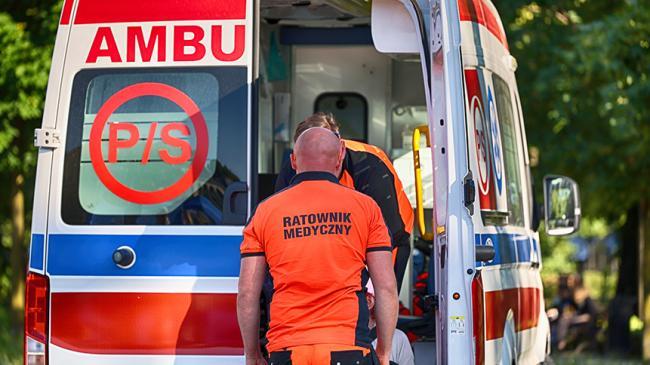
The NIK also audited medical dispatch centres and emergency medical teams (EMTs). According to data from the Statistics Poland, there were 1,664 EMTs operating in Poland at the end of 2024. However, the audit findings reveal significant disparities in actual access to emergency medical services. After nearly 25 years of the system’s operation, in each of the voivodships covered by the audit, there were areas where in more than half of all call-outs emergency medical teams exceeded the maximum expected time to reach the patient, and in some cases, this was as high as nine out of ten call-outs. Residents of these areas therefore had a significantly lower chance of receiving effective medical assistance in the event of a medical emergency. The expected parameters for the dispatch of emergency medical teams and their response times were also exceeded.
Despite the irregularities identified, the NIK gave a positive assessment regarding the provision of the necessary medical equipment and apparatus in ambulances, helicopters and emergency departments. The EDs provided patients with access to diagnostic imaging (ultrasound, X-ray, CT scans, and MRI) and laboratory tests. The location of the EDs also met the requirements, but irregularities were found in three hospitals regarding the requirements for certain rooms. The Office’s auditors identified the highest number of such irregularities at the Grójec District Medical Centre, the most serious of which concerned the failure to ensure properly functioning ventilation in the operating theatre and in the ED isolation room.
In turn, two out of the five operators of emergency medical teams audited had equipped their basic EMTs with medicines which neither the paramedics nor the nurses within that system were authorised to administer independently. Furthermore, one of the ambulances contained a cylinder of medical oxygen that exceeded its expiry date by 162 days. In this context, the NIK points out that there is no standard regarding the minimum supply of medicines in ambulances, and that individual EMT dispatch centres decide what is carried in them. Hence, one of the Supreme Audit Office’s post-audit recommendations addressed to the Minister of Health concerns precisely the establishment of such a standard.
This is not the first time the NIK has audited the State Emergency Medical Services system. The Office had already highlighted a whole list of its problems back in 2019–2020 – a shortage of emergency medicine doctors, excessively long waiting times for the arrival of emergency medical teams, and excessive pressure on emergency departments. According to the latest findings, little has changed between 1 January 2023 and 1 September 2025. This is despite the fact that the Act of 2007, which sets out the principles governing the organisation, operation and funding of the emergency medical services system, has been amended numerous times – 45 times by the end of October 2025, and four times during the period covered by the audit. Some of these amendments were not intended to improve the system, but merely to make ad hoc adjustments to the law in response to emerging problems. This is evidenced, for example, by amendments to the regulations introduced in response to staff shortages, which broadened the definition of a ‘system doctor’ to include further specialisms, and even doctors still undergoing specialist training. Similarly, the deadline for the entry into force of the requirement for emergency departments to have a helicopter landing pad was also postponed. Two of the hospitals audited still did not have one. The National Health Fund (NFZ) was also prevented from imposing contractual penalties for the absence of a doctor in the specialist emergency medical team. None of these changes resolved the existing problems.
The NIK audited the Ministry of Health, five voivodship offices, the Polish Medical Air Rescue, 10 hospitals operating EDs, and five operators of emergency medical teams (EMTs). The audit covered the voivodships of Lubuskie, Lubelskie, Zachodniopomorskie, Kujawsko-Pomorskie, and Mazowieckie. The audit covered the period by: 1 January 2023–1 September 2025.
The number of basic emergency medical teams is increasing, whereas the number of specialist teams is decreasing
The NIK examined one medical dispatch centre in each of the five voivodships covered by the audit and has no reservations about their organisation, staff qualifications, or the equipment at the dispatch desks. In each of them, however, the auditors found that medical dispatcher posts were not fully staffed, with this being the case on every day covered by the audit in some instances. Between one and four staff members were missing from individual shifts, which was mainly attributed to a shortage of people willing to work.
- Medical Dispatch Centre – receives emergency calls and dispatches EMTs. These tasks are carried out by medical dispatchers. Medical Dispatch Centres operate within the structure of voivodship offices.
- EMT dispatcher – manages emergency medical teams, which comprise doctors, paramedics, nurses and drivers (specialist emergency medical teams) or paramedics, nurses and drivers (basic emergency medical teams).
- Emergency Department (ED) – provides healthcare services to people in a state of medical emergency. The medical staff of the ED consists of doctors, paramedics and nurses.
- Polish Medical Air Rescue – also called as Air Ambulance Service, operates air ambulance teams.
A particularly acute staffing problem concerned doctors in EMTs. Two out of five EMT dispatch centres failed to provide doctors for 25% of the scheduled shifts of specialist EMTs, which, unlike basic EMTs, must include a doctor. At the Voivodship Ambulance Station in Szczecin, between 2023 and 2025 (up to 31 March), the total number of hours of service provided by the specialist EMTs with an incomplete crew (without a system doctor) amounted to over 86,000 hours (i.e., 29.1% of the 295,500 hours recorded during the period under review). Even a significant expansion of the list of doctors recognised as so-called ‘system doctors’ failed to prevent this phenomenon. Emergency medicine specialists accounted for just 24% of the doctors in the EMTs.
The Office’s auditors also examined the working hours of certain doctors, nurses and paramedics forming part of emergency medical teams employed under civil law contracts. At all the audited emergency medical service providers, these staff members repeatedly worked continuously for more than 24 hours. An extreme case was that of a doctor at the Radom Emergency Medical Service Station who worked for 144 hours, equivalent to six days. At the Voivodship Ambulance Station in Szczecin, five doctors worked for more than 48 hours on 74 occasions, and in one extreme case for 120 hours – that is, continuously for five days. In June 2024, a paramedic there worked a total of 456 hours – which is as if he had worked round the clock for 19 days.
At the Voivodship Ambulance Station in Bydgoszcz, the doctor who worked the longest shift did so for 72 hours, while in 35 cases, paramedics worked for 48 hours. At the Voivodship Ambulance Station in Lublin, out of the 15 people surveyed (doctors, paramedics and nurses), 12 people worked for between 24 and as many as 70 hours in 92 cases.
At the voivodship ambulance services in Bydgoszcz and Lublin, work rosters for members of the emergency medical teams were drawn up in such a way that the same person, on the same day and at the same time, would finish work at one EMT and start at another, in a completely different location. At the Radom Ambulance Station, three doctors, after finishing their shift at one EMT, started working in another emergency medical team after a period ranging from 15 minutes to seven hours.
And all of this is in accordance with the law. The management of the inspected ambulance stations explained that the civil-law contracts concluded with these employees do not in any way limit their working hours, and that members of the EMTs do not provide care continuously while on duty and therefore have time to rest and recover between call-outs.
Instances of continuous work lasting more than 24 hours also stemmed from a shortage of doctors, coupled with the requirement that specialist emergency medical teams remain on constant standby. It was also pointed out that some individuals worked continuously for over 24 hours entirely knowingly and voluntarily, often at their own request. As they explained, the considerable distance between their place of residence and the EMT base meant that working for shorter periods was not financially viable for them.
During the state of epidemic threat, emergency medical teams were permitted to operate with reduced staffing levels. Following the lifting of this state of emergency, the Minister of Health exempted the National Health Fund (NFZ) from imposing contractual penalties in the event of a doctor’s absence from an EMT, provided that the team comprised at least three persons authorised to perform emergency medical procedures (paramedics or nurses). This measure, introduced as a temporary arrangement in 2023, is still in force, and the latest amendment to the regulations has extended its validity until the end of 2026.
How long does it take for an ambulance to arrive?
The law sets out specific parameters for the operation of medical dispatch centres. Thus, the dispatch time for an emergency medical team in a so-called Priority Code 1 should be no more than 30 seconds, and in a Priority Code 2, a maximum of 1.5 minutes. An audit performed by the NIK revealed that for the Priority Code 1, the dispatch time was exceeded in over 25% of calls (ranging from 25.7% in 2024 in the Lubuskie Voivodship to 42.6% in 2023 in the Zachodniopomorskie Voivodship). The most frequently cited cause of delays was the unavailability of free EMTs. Meanwhile, the effectiveness of medical assistance in a medical emergency depends to a large extent on the speed with which it is provided.
From the moment a call is received, an EMT should set off within 1 minute for a Priority Code 1, and within 3 minutes for all other calls. None of the dispatch centres audited met these time limits, though the extent of the delays varied (being noticeably lower at the Radom Ambulance Station). The reasons cited for the delays included technical issues, the increased distance between the staff rooms and the ambulance parking area, but also shortcomings on the part of the staff themselves, including a lack of motivation to respond quickly to calls for patients whom, in the opinion of the EMT staff, had not been seen by their general practitioners (GPs). As part of a pilot programme run by the Lublin Voivodship Office, cameras have been installed at the stations where emergency medical teams are based, enabling dispatchers to monitor ambulance call-outs, which is expected to significantly improve response times.
In turn, the maximum response time for an emergency medical team to reach a patient should not exceed 15 minutes in towns with a population of over 10,000, and 20 minutes outside such towns. In all the voivodships covered by the audit, these times were exceeded in between 21.5% of call-outs in the Kujawsko-Pomorskie Voivodship and 37.8% in the Mazowieckie Voivodship.
Between 1 January 2023 and 31 March 2025, the Mazowieckie Voivodship had the highest number of inhabitants per EMT – almost 25,000 people – and the Lubuskie Voivodship had the lowest – over 17,500 people. Considering the area covered by each EMT unit, the best ratio was recorded in the Mazowieckie Voivodship, where one unit covered 161 km2. In contrast, in the Zachodniopomorskie Voivodship, one unit covered an area nearly twice as large – 305 km2.
The NIK found the highest percentage of EMT call-outs exceeding the maximum expected arrival time in the following municipalities:
- Nowe Warpno in the Zachodniopomorskie Voivodship – 99.1% with 349 call-outs, and
- Dzierzgowo in the Mazowieckie Voivodship – 96.9% with 388 call-outs.
Although, according to data from the Statistics Poland, 91 new EMTs were established between 2021 and 2024 (these were basic EMTs only; the number of specialist EMTs fell in three voivodships) access to emergency medical services was not the same in all the voivodships covered by the audit. This means that the voivodes, whose remit includes planning the deployment of EMTs, failed to take into account patients’ right to equal access to such services.
Polish Medical Air Rescue – lack of training for doctors on new medical equipment
Air ambulance teams work in groups of three (a professional pilot, a doctor and a paramedic or nurse). The NIK inspected two air ambulance service operational bases – in Płock and Warsaw – and has no reservations regarding their operation. Cases were identified within the air ambulance service where doctors worked continuously for over 24 hours, but these were isolated incidents, and the organisation of work minimised the risk of such situations arising.
However, the Supreme Audit Office found that doctors who were members of EMTs had not undergone the compulsory training related to changes to the medical equipment on helicopters – the fitting of new defibrillators, ultrasound scanners and chest compression devices. 134 out of 137 doctors (approx. 98%) working in air ambulance services had not completed the training. This was caused by an oversight regarding a provision in the Air Ambulance Service Operational Manual. Due to the limited availability of doctors in the air ambulance service, an e-learning format was adopted; however, even in this format, not all doctors completed the training – the largest proportion – almost half (40.2%) – completed the training on the use of ultrasound scanners.
Overcrowded Eds, yet almost half of patients do not require urgent care
According to data from Statistics Poland, 11 new emergency departments were established between 2021 and 2024 to provide medical care to people in a state of medical emergency. By the end of 2024, there were already 250 such departments, meaning that on average there was one for every 150,000 inhabitants. So why are these departments so crowded with patients?
The Supreme Audit Office (NIK) audited the A&E departments at 10 hospitals. The NIK audited EDs in 10 hospitals. Nearly half of their patients did not require urgent medical attention, and only 6.2% were in the highest-risk category. Almost 45% of those who arrived at emergency departments were assigned a priority category in the patient care management system (TOPSOR) that allowed them to be referred to primary healthcare. However, emergency department staff rarely made use of this option.
The majority of patients assessed in EDs were those who had arrived at the hospital on their own. Only 29.4% were transported by emergency medical teams, and of these, only 38.4% were subsequently admitted to hospital.
The decision as to whether a patient’s treatment will be continued in another hospital department (or at another hospital) should be taken by a doctor in the emergency department, within a timeframe specified by the hospital manager. This should limit patients’ prolonged stays in EDs and thus ensure that further treatment is initiated without delay in cases where this is required. The audit revealed that in six out of ten hospitals such time limits had not been specified, and in a further two they were in force only for part of the period covered by the audit.
At the same time, the organisation of work in the wards to which ED patients are transferred should ensure that beds are available to them as quickly as possible. It is the responsibility of hospital managers to determine the number of beds required. Only two out of ten hospitals fulfilled this obligation, and it is precisely this information that is useful to the voivodship emergency medical services coordinator, medical dispatchers, and emergency medical teams' managers.
Shifts are covered, but some staff worked a record 144 hours without a break
The NIK also audited the competence of medical staff in emergency departments and highlighted that only 3.4% of doctors working in these departments were specialists in emergency medicine. It was therefore no surprise that, during certain periods covered by the audit, the heads of EDs in three hospitals – the Medical Centre in Nowy Dwór, the Independent Public Healthcare Centre in Choszczno and the Independent Public Healthcare Complex in Gryfice – did not possess the required qualifications. In the latter case, although the doctor in charge of the department had a specialisation in internal medicine, he was not a specialist in emergency medicine, did not have completed such a specialisation, and it was not demonstrated that he had at least three thousand hours’ experience of providing healthcare services in EDs over the past three years. During part of the period covered by the audit, the person acting as ward nurse in the ED at the District Medical Centre in Grójec also failed to meet the requirements. This was because she did not have the required five years’ experience of working in an emergency department. The supervisors of these individuals explained that they had been entrusted with managerial positions due to difficulties in recruiting suitable specialists.
In the vast majority of the hospitals covered by the audit (eight out of ten), NIK auditors did not find any irregularities regarding the required staffing levels for on-call duties in EDs. On certain days, the Independent Public Healthcare Centre in Choszczno failed to ensure this. Meanwhile, at the Medical Centre in Nowy Dwór, although the technical capacity existed, no records of doctors’ working hours were kept, which made it impossible to verify staffing levels in the EDs. This does not mean that there were no staff shortages in the other hospitals. These were made up for through overtime, including by medical staff employed on fixed-term contracts. At the District Medical Centre in Grójec, this applied to all six doctors employed on permanent contracts, although two of them did not give the written consent required by law. In 2024, the excess working hours of ED doctors at this hospital ranged from 24 hours 32 minutes to 397 hours 55 minutes, and in 2025 from 20 hours 45 minutes to 198 hours 20 minutes per month (in two-monthly pay periods). Meanwhile, at the 10th Military Research Hospital and Polyclinic IPHC in Bydgoszcz, in Q1 2025, nine staff members – nurses and paramedics – worked in excess of the maximum working hours, ranging from 1 hour and 40 minutes to 65 hours and 45 minutes.
In the case of work carried out under civil law contracts which do not limit working hours, in almost all of the hospitals audited (9 out of 10) some of the shifts worked by ED staff lasted longer than 24 hours, although the scale and nature of this work varied. The NIK examined various groups of medical staff (doctors, paramedics, and nurses), ranging from a few to a dozen or so people per group, and covering various periods.
The holder of the record for overwork worked in the ED of the Independent Public Healthcare Centre in Sulęcin for 144 hours, which is equivalent to six days, while in seven other cases, staff worked for 120 hours (five days) each. In Q1 2024 and Q1 2025 alone, a total of 58 cases were identified in which doctors worked at this hospital for more than 24 hours without a break, and one paramedic worked for between 36 and 48 hours on four separate occasions during the periods covered by the study.
At the 10th Military Research Hospital and Polyclinic IPHC in Bydgoszcz, of the 14 doctors included in the study, eight provided care continuously for over 24 hours in 120 cases – ranging from 31 hours and 10 minutes to a maximum of 107 hours, and on top of that, some were on-call by telephone following an extended shift of 13 hours. In 42 of the 120 cases, these doctors worked for at least 48 hours.
At the Independent Public Healthcare Centre in Gryfice, some doctors’ shifts not only lasted more than 24 hours but also involved other duties at the same time. In just one month, one doctor worked seven consecutive 48-hour shifts in the ED. Another worked simultaneously in the ED, the Internal Medicine Ward and carried out so-called endoscopy shifts. In two instances, another doctor provided care in the emergency department, carried out administrative duties at the hospital, and remained on ‘standby’ to provide care during hyperbaric oxygen therapy sessions for a total of 30 hours and 35 minutes. In one instance, a nurse worked in the ED for 32 hours without a break.
At the Voivodship Multidisciplinary Hospital in Gorzów Wielkopolski, the longest working hours recorded among doctors ranged from 32 to 72 hours without a break. At the Multidisciplinary Hospital in Inowrocław, five doctors provided care continuously for over 24 hours on 20 occasions, working between 31 hours 10 minutes and 55 hours 30 minutes. At the Independent Public Healthcare Centre in Choszczno, each of the five doctors providing services in the ED worked for over 24 hours on one to four occasions. The longest period of uninterrupted work amounted to 72 hours.
As with the dispatchers of emergency medical teams, ED managers attributed such situations, on the one hand, to difficulties in ensuring sufficient staffing levels and, on the other, to the absence of working time standards for staff employed under contracts other than employment contracts.
Figures pulled out of thin air
The Patient Service Mode in the Hospital Emergency Department (Tryb Obsługi Pacjenta w Szpitalnym Oddziale Ratunkowym, TOPSOR) is a nationwide IT system managed by the National Health Fund, designed to streamline the work of emergency departments and organise the order in which patients are admitted. TOPSOR was intended to collect and analyse data by recording the times taken for each stage of patient care. A correctly recorded process should comprise seven elements: the time a ticket is collected, the registration time (call time), triage time (medical triage), assignment of urgency category, time of medical consultation, time of discharge from the ED, and time of removal (of an untreated patient who left before triage, after triage, was referred to primary healthcare, failed to attend after being summoned, for whom a ticket number was generated accidentally, or whose admission was refused).
An audit conducted by the NIK revealed that the completeness and reliability of the data entered into the TOPSOR system by individual hospitals varied considerably. For example, at the 10th Military Research Hospital and Polyclinic IPHC in Bydgoszcz, only one instance of medical consultation was recorded, despite the fact that triage times were recorded over 68,300 times. Conversely, in all the EDs audited, the number of triage calls was higher than the number of registration calls – the difference ranged from six at the District Medical Centre in Grójec to almost 21,000 at the Independent Public Healthcare Centre in Gryfice.
The TOPSOR system also failed to provide reliable data on the time spent by doctors attending to patients. During the period covered by the audit, there were over 127,300 entries for all the audited hospitals, recording both the time of the patient’s discharge and the time of medical attendance. In almost 97,000 cases (approx. 76%), the difference between these times did not exceed 10 seconds, which would mean that the doctor spent exactly that amount of time admitting and examining the patient – something that is physically impossible.
Inaccurate entries limited the ability to carry out the analyses for which the TOPSOR system had been introduced. The heads of emergency departments explained that providing medical assistance to people in a state of medical emergency takes priority over recording the individual stages of the treatment process in TOPSOR.
Conclusions and recommendations
The Supreme Audit Office recommends:
To the Minister of Health for:
- taking comprehensive measures aimed at increasing the number of doctors within the system, in particular specialists in emergency medicine within the Emergency Medical Services (EMS) system;
- including in the voivodship action plans for the system the number of beds in organisational units of specialist hospitals providing the healthcare services necessary for emergency medical care, reserved for people in a state of sudden medical emergency who are admitted to these units from the emergency department;
- specifying the minimum stock of medicinal products to be kept in ambulances.
To voivodes for:
- taking into account, when planning the deployment of the EMTs, patients’ right to equal access to healthcare services;
- ensuring the required staffing levels for dispatch centres.
To the managers of hospitals operating EDs for:
- defining the time limits within which an ED doctor must decide on admission to a ward and transfer to another ward for the purpose of continuing treatment;
- determining the number of hospital beds in units specialising in the provision of health services essential for emergency medical care for patients transferred from the ED.