

Pascale Hélène Dubois is the World Bank’s Chief Suspension and Debarment Officer. Her role is similar to the judge of an administrative court of the first instance. Dubois imposes sanctions on companies accused of financial frauds and corruption. The Bank wants to make sure the money it invests in aid projects all over the world is used in line with sound management and effectiveness principles. Therefore, the Bank is interested in cooperation with NIK which safeguards public funds in Poland. President Krzysztof Kwiatkowski during the working meeting with Pascale Hélène Dubois discussed future activities of both institutions.
President of NIK Krzysztof Kwiatkowski about the meeting with Pascale Hélène Dubois
World Bank and NIK cooperation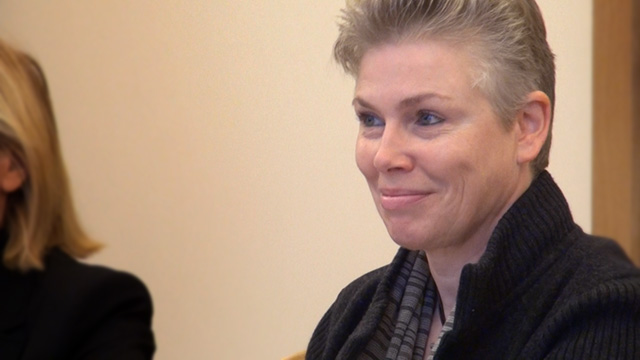
NIK has cooperated with the World Bank for years on the audits of public projects co-financed by that institution in Poland (e.g. on the Odra River Basin Flood Protection Project or the previous Post-Accession Rural Support Project). The Bank also uses the experience of NIK employees during training programmes and workshops which the former organises for developing countries. In summer this year, NIK experts have taken part in an institutional development project organised by the World Bank for the SAI of Iraq. The meeting was devoted to relations among SAIs and their mandates. ”Our auditors have unique experience of the system transformation. After 1990, we’ve been actually building the state audit from the scratch” - explains Jacek Jezierski, President's Advisor for international cooperation.
Polish people are also willing to take part in the trainings organised by the World Bank. In June, a workshop was organised in NIK headquarters. It was called ”Financial budget reporting in the public sector - prospects for Europe and Poland” and was attended by about 90 people from various public institutions, including 25 employees of NIK.
The World Bank has two ambitious goals: to put an end to extreme poverty and boost prosperity of all people around the globe. The Bank wants to achieve that by promoting good practices in the public sphere, fighting with corruption and promoting the private sector. Numerous initiatives taken by the WB Group focus on helping the most needy countries. The Bank offers long-term preferential loans for health care, environment protection, education and infrastructure development.
More than a billion people worldwide still live in poverty. Growing prosperity in some parts of the globe goes together with increasing disproportions and social exclusion. That is why, the World Bank’s mission is more valid today than ever before.