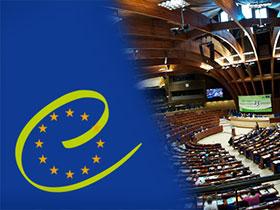


Previously external auditors of the Council of Europe were Supreme Audit Institutions of France and the United Kingdom. ”We are happy that the Council has chosen us. This is enormous prestige but also great responsibility” - says NIK President Krzysztof Kwiatkowski who has signed in Strasbourg on Wednesday the agreement defining the terms of audit .
The audit of the Council of Europe (COE), the key institution in terms of human rights, will be carried out by a team of experienced auditors. Their task will be to screen the COE financial statements but also to conduct task performance audits. And this is a huge challenge. The Council of Europe deals not only with human rights protection but also with maintenance of cultural heritage, support for local governments and promotion of humanitarian values. Besides, it takes measures to enhance international cooperation in the fight against crime and money laundering, combats corruption, supports development of the most needy countries and sets standards for medical substances.
In order to perform this task and many others, the Council has developed a complex structure of institutions, agencies and offices operating all around Europe. ”Our auditors will have to face a difficult task but we will use their long experience in domestic and foreign audits” - says NIK President. Undoubtedly, the audit of the Council of Europe will be one of the most important international tasks for NIK in the nearest future.
The Council of Europe also promotes development and support programmes, currently financed e.g. by Austria, Switzerland and Sweden - which also need auditing. In the coming years NIK will look into the financing of programmes addressed to Ukraine (Ukraine Immediate Measures Package), Moldova (Confidence building measures for the Transnistrian region of the Republic of Moldova) and Armenia (Institutional Support to the Communities Association of Armenia).
The Council of Europe is an international organisation founded on 5 May 1949. It was established by 10 states - Belgium, Denmark, France, Ireland, Italy, Luxembourg, the Netherlands, Norway, Sweden and the UK which signed the Statute of the Council of Europe referred to as the London Treaty. Currently the Council of Europe brings together 47 member states, nearly twice as many as the European Union. It is based on over 200 international treaties. Basic goals of the Council include promotion and strengthening of three values: human rights, democracy and rule of law in Europe. The Council of Europe conducts broad activity in terms of creating new legal standards, developing member states’ cooperation in the field of law and reinforcing local democracy. It also remains active in the field of culture, education, support of youth, sport, cultural and natural heritage, intercultural dialogue, land use as well as social affairs, healthcare and migration. The Council of Europe is highly respectable as an organisation promoting human rights, principles of law and democratic standards. Its hallmark are numerous conventions.