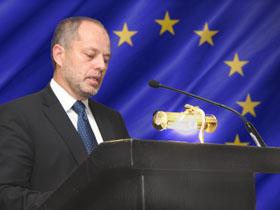


Annual meetings of the Contact Committee provide a forum for exchanging knowledge of and experience in auditing issues related to the EU. The main point of this year’s meeting was the seminar dedicated to the European semester and other elements of the new European economy management system.
The new management system is the EU’s response to the global economic crisis. It is based, among others, on the idea of reinforcing a common economic programme through increased supervision at the EU level. The European semester is one of its instruments, aimed at preventive surveillance of the economic and fiscal policies of EU member states. The participants in the meeting presented their experience in implementing the European semester and debated on the role of the SAIs in the use of this instrument. The President of the NIK Jacek Jezierski discussed the Polish experience in auditing of the state’s financial stability.
The Heads of European SAIs also presented national audits on issues related to the EU functioning. Jacek Jezierski discussed the results of the audit regarding preparations of the government administration for the Polish Presidency in the Council of the European Union, conducted by the NIK in 2010. Importantly enough, Poland is the only EU Presidency where such an audit has been carried out.
At the Contact Committee meeting, the Working Group on Structural Funds presented the final report on the audit of costs and benefits of structural funds auditing, in which representatives of the NIK had participated.
This year’s meeting of the Contact Committee gathered 27 Heads of European Supreme Audit Institutions and the European Court of Auditors, as well as representatives of five EU Candidate Countries.
The Contact Committee (CC) is an assembly of the Heads of Supreme Audit Institutions (SAIs) of the European Union Member States and the European Court of Auditors (ECA), who gather once a year to exchange knowledge and experience in the field of European funds. The activity of the CC is supported by permanent representatives of respective institutions (the so called Liaison Officers), who prepare meetings of the CC and debate on the working issues of vital importance to the CC.