

In 2011, the employment ratio of disabled persons in the general government sector was almost the same as in 2010, that is only 1.3 percent. To change that situation, the Polish Sejm changed the recruitment procedure in the general government sector [1]. New regulations gave priority to the disabled to take up a job, provided the employment ratio of such persons in a given institution was lower than 6 percent (which was the case in most of the audited entities) and a disabled person was one of the top five candidates.
The audit results show that the changes implemented in 2011 did not have significant impact on an increase of the disabled employment ratio in the general government institutions. In 2012, the employment level of such persons did go up slightly (by 0.26 percentage point against the end of 2011). In many cases, though the real reason behind that increase was reduction of the total employment ratio and the fact that more of the existing employees had their disabilities confirmed by disability evaluation teams.
The low disabled employment ratio was largely due to little interest of those persons to get hired. Besides, they were not prepared well enough for the job and had little professional experience. For instance, of 1580 persons seeking job in the Ministry of Agriculture and Rural Development, only 33 (2 percent) submitted disability decisions (of whom 21 candidates met formal requirements), but none of them was found in the top five. It also happened that disabled persons did not take up a job because of offered pays (e.g. in the Ministry of Labour and Social Policy).
Active approach of the executives contributed to an increase of the disabled employment ratio in the audited entities. According to NIK, a positive example are activities taken by the management of PFRON (State Fund for Rehabilitation of Disabled Persons). The Fund organised among others internships and traineeships for disabled persons and took initiatives to create a friendly work environment. As a consequence, PFRON had the highest disabled employment ratio of all auditees. In December 2012, it exceeded 12 percent, while in many other audited institutions it was lower than 1 percent.
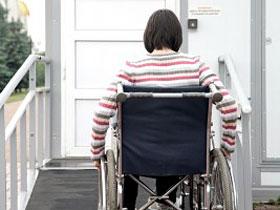
Most buildings containing audited institutions were adjusted to the needs of disabled employees. The ways leading to the entrances had lowered kerbs and ramps. Also, there were marked car parking spaces in front of the buildings. However, 6 of 15 audited headquarters were found in the monument register. It meant that the smallest interference with the building architecture required consent of the conservator of monuments. That was for instance the case with the headquarters of the Agricultural Social Insurance Fund (KRUS), Ministry of Health (MZ) and Office of Competition and Consumer Protection (UOKiK). A request of the President of KRUS not to treat the building as a monument was turned down by the President of Warsaw (the audit revealed that none of KRUS buildings was adjusted to the needs of the disabled).
On the other hand, examples of the Ministry of State Treasury, Ministry of Health and UOKiK show that partial adjustments of the building are possible even with monuments. For instance, MZ installed toilets for the disabled, anti-slip floors and portable stair lifts, whereas UOKiK made a ramp to the building, equipped the toilet for the disabled and installed a stair lift. The Ministry of State Treasury additionally installed sound signals in lifts and set up a ramp near the building entrances.
The audit results show that the initiative of the management of individual public administration institutions is the key to increase the disabled employment ratio. The executives’ approach should be proactive and go beyond mere obedience of regulations. According to NIK, they should:
- lay more stress on informing disabled persons of their privileges in the recruitment process;
- cooperate with job centres and organisations for the disabled;
- make sure that employees responsible for recruitment know what possibilities and benefits are related to the employment of disabled persons;
- organise more internships and traineeships for disabled persons;
- introduce forms of work friendly for the disabled (e.g. remote work).
NIK underlines that hiring disabled persons is profitable both for the employer and the state budget. The employer pays a smaller contribution for PFRON then and the public finance is no longer charged with the benefits which a disabled person has taken to date. The Supreme Audit Office also stresses social and economic advantages of hiring such persons.
[1] Act of 19 August 2011 on an amendment to the Civil Service Act and other acts