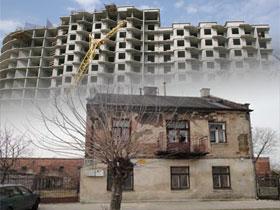


The Supreme Audit Office verified how the government and local governments perform their constitutional and statutory tasks related to housing policy. The latest NIK report is another warning signal. Poland has the deficit of 1.5 million flats and this situation has not changed for ten years now. The need to withdraw from use about 200 thousand flats due to their technical condition will additionally deepen that deficit. Besides, the government analyses reveal that 6.5 million Polish people live in the conditions that do not comply with the accepted norms and standards.
The reasons for the high deficit in housing have been the same for years: the lack of proper funds for investments and missing land use plans. However, even with limited funds and administrative obstacles the situation could be improved if there was a clearly specified and consistently implemented housing policy in Poland. NIK states that such coherent and comprehensive state policy, carried out based on a strategy, with the help of programmes focused on specific targets, is in fact non-existent.
In November 2010, the Sejm which shared NIK’s standing in that matter called the government to define the housing policy. At that time the document ”The key problems, objectives and directions of the Programme for supporting housing development by 2020” was adopted. Against the expectations and initial assumptions, it was not a complex programme. The document did not provide any detailed solutions. It specified neither the planned effects nor the funds needed to perform the tasks, or the deadlines for their execution. The Minister of Infrastructure, responsible for the housing policy, has been taking only ad hoc and inconsistent actions for many years now. The confidence of citizens and investors was weakened by numerous justifications given for the implementation or liquidation of subsequent initiatives.
A popular programme called „The Family's Own Place” will finish in December this year (after six years). The Programme’s effectiveness is proven by an increase in the number of people willing to use the government grants: from about 10 thousand in the first year of its functioning (2007) to 43 thousand in 2010. By 31 December 2010, banks granted nearly 85 thousand loans as part of this programme and the total of government grants exceeded PLN 308 million. Considering the ever-growing popularity of the programme (despite the crisis) and the predictions that within the coming seven years the entire amount of government grants will be bigger than PLN 2.5 billion, the government resolved to complete it by the end of 2012.
In 2009, the National Housing Fund was liquidated. It was the beginning of the state‘s withdrawal from the support of social rental housing and the so-called tenant’s housing for lease. The Fund’s money supported mainly preferential loans for social housing societies and housing cooperatives. From the beginning of 1995 to the end of 2010, 87.5 thousand of cooperative tenant’s apartments and apartments with moderate rent were built. The Fund’s tasks along with the money accumulated there were taken over by Bank Gospodarstwa Krajowego. However, due to the crisis and prolonging social consultations, the new model of supporting social and tenant’s housing remains suspended. BGK positively reviewed only 9 out of 234 requests submitted in 2009. Since 2010, the social housing societies and housing cooperatives may not submit credit applications as the relevant executive acts are still not there.
The local governments that are obliged to provide shelter to the poorest*, receive aid among others from the Grant Fund (operating within BGK). Since the time the Fund was established, the money has helped to build more than 11 thousand of social premises and 900 places in hostels were set up (of which 6 thousand in the audit period). It is still not enough to cover the needs. In 33 audited communes the period of waiting to conclude the lease agreement for communal premises ranged from 1 month to 18 years (in extreme cases). A big problem for local governments is also to provide social premises for executing court decisions. The communes audited by NIK prepared only 1 444 such premises out of 12 648 premises determined in court decisions. With the efficiency of only 11.4 percent both the number of lawsuits and the level of damages awarded to citizens by courts is growing rapidly. In the audited period the value of claims filed in 33 communes amounted to PLN 60 million (e.g. only in the first half of 2011, Będzin was supposed to pay damages of PLN 759 thousand).
Commercial investments could be a complementary solution (to a certain degree) for social housing. However, in many communes the lack of local land use plans makes it difficult to start the construction. It forces the investors to wait a long time for the officials’ single decisions concerning the development conditions.
* Pursuant to Article 4 of the Tenants' Rights Protection Act, providing conditions to satisfy housing needs of the self-government community, is one of the commune’s own tasks. The commune provides social premises and substitute premises, and also satisfies housing needs of low-income households.