

The National Cancer Control Programme which started in 2006 should last until the end of next year. In line with statutory provisions the state should earmark at least PLN 250 million per year for the Programme, of which at least 10 percent for early cancer detection. In reality the amounts allocated to early prevention were much bigger - they made up as much as 38 percent of the Programme expenditures. The primary Programme objective is to stop the increase of the number of cancer cases and to achieve the average European ratios in terms of early detection of the cancer and effectiveness of its treatment.
cancer
NIK has verified execution of selected Programmes, among others related to the prevention and early detection of breast and cervix cancer, oncological radiotherapy, positron emission tomography (PET) as well as the system of gathering and recording cancer data.
According to NIK, a significant strength of the Programme is that it provides free access to preventive health examinations to everyone, without limitations. The Ministry of Health, though, does not have full, aggregated data on measures taken by various entities dealing with cancer prevention and treatment. Also, there is no system for information exchange or cooperation among these entities.
Screening tests: administrative and logistic costs since 2006 of over PLN 159 million (of which invitations’ costs = PLN 30 million)
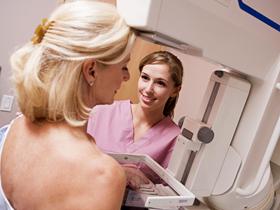
The screening tests still remain the most efficacious and irreplaceable method of early detection and prevention of cancer. However, in line with the recommendations of WHO and experts from the European Commission, at least 70-75 percent of the target population would have to go for the examinations to make sure they are effective and pay off.
Strangely enough, despite numerous campaigns to increase the number of Polish women undergoing preventive health examinations, the result has not improved in the recent years and in some provinces it has even gone down.
NIK emphasises that the campaigns conducted by the Central and Provincial Coordination Centres to encourage Polish women to go for cytology and mammography tests are ineffective. For many years the basis of all promotional campaigns has been a letter of invitation. Since 2009, PLN 30 million has been spent to send personal invitations for screening tests (1/3 of all money earmarked for administrative and logistic activities). In response to nearly 21 million invitations sent, a bit more than 3.5 million women (18 percent) went for the examinations.
The actual percentage of women (who used the invitations and went for examinations on their own) was:
- in case of mammography it ranged from 36 percent in 2009 to less than 43 percent in 2012 (19 percent in 1H2013),
- in case of cytology it was 26.7 percent in 2009 and 23.4 in 2012 (10.4 percent in 1H2013).
Aggregated data on the number of women who had cytology or mammography done as part of different systems, for instance hospital treatment, primary or outpatient health care, are dispersed. Therefore, reliable assessment of the Programme effectiveness is impossible.
Radiotherapy programme: cost over PLN 1 billion since 2006
Since the Programme roll-out in 2005, the number of radiotherapy devices increased from 70 to 123. At the same time, queues have become shorter and shorter ( in 1998 the waiting time was 8-10 weeks and in 2012 it was only 4-5 weeks). The number of patients undergoing radiotherapy treatment increases as well (from about 40 thousand in 1999 to 80 thousand in 2012). But the whole project does not work as it should and patients still wait too long for the start of radiotherapy treatment which reduces their chances for recovery. In 1/5 of audited radiotherapy centres the waiting time exceeded 4 weeks and in extreme cases it was more than 2 months.
Despite the fact that nearly PLN 2 billion was spent on the Programme since 2006 (i.e. nearly 56 percent of expenditures incurred for the entire Programme) the planned ratio (recommended by WHO) - 1 device for 250 thousand patients - was not achieved. NIK has noted that the Minister of Health decided to grant a subsidy for the purchase of new radiotherapy equipment and modernisation of the existing one, without appropriate analysis of the market and prices offered by the equipment suppliers. The Minister did not seek the opinions of independent experts in terms of using devices of various producers in developing integrated radiotherapy lines.
At the end of 2012, there were on average 321 154 persons per one radiotherapy device. The norms recommended by WHO (in accordance with the Report on radiotherapy in Poland in 2012 developed by the National Consultant in oncological radiotherapy) were complied with by two provinces only. The result was so poor because the audited institutions have successively withdrawn used equipment for safety reasons.
Positron Emission Tomography (PET) Programme - cost of over PLN 90 million since 2006
The Programme assumed that there should be one PET Centre per 10 million inhabitants by 2008 and later on - as a target - each device should carry out at least 2000 examinations per year.
In December 2012, the public medical centres covered by the audit had at their disposal as many as seven scanners bought as part of the Programme. Four of them made as many as two thousand examinations per year (some of them much less - e.g. the University Clinical Centre in Gdańsk - 423 in 2010), mainly due to unattractive contracts with the National Fund.
The increase of the number of cancer centres equipped in PET devices did not shorten the waiting time. Moreover, in three audited centres the number of patients waiting for their examination increased.
According to the State Sanitary Inspectorate, there are currently 27 PET centres operating in Poland, of which 14 in public health centres and 13 in private medical companies.
The planned deadline was exceeded: by the end of 2011, the production of FDG pharmaceutical for domestic needs was not launched, although the Ministry of Health successively financed the purchase of specialist equipment for three selected entities since 2007. Two of them manufactured the pharmaceutical for their needs only, at a cost significantly exceeding the prices offered by foreign suppliers, while the third one was preparing documentation related to the pharmaceutical production permit in Poland.
The number of cancer cases in Poland is still growing. Changes in the population structure and increasing number of elderly people are going to make the figures go up even more. This is a huge threat for the healthcare system and the state policy in this respect. The National Cancer Control Programme operates on an ad hoc basis and supports cancer control measures.
According to NIK the Programme needs a better, modern formula. The Programme itself as well as the organisational solutions adopted in cancer treatment should make up a consistent system, providing patients with reliable information, quick start of treatment and efficient coordination of its stages.
For that purpose it will be essential that an efficient and functional system be developed to record patients’ participation in preventive health examinations. The Supreme Audit Office has also reissued its recommendation from 2009 to the Minister of Health to verify administrative and logistic activities taken as part of screening tests and to consider introducing new methods and organisational forms to help increase the number of women undergoing the examinations.
Besides, NIK has also addressed the Health Minister with the following recommendations:
- to reconsider the concept of organising joint purchases of radiotherapy equipment via the Public Procurement Unit at the Ministry of Health. Making more health care entities involved in the joint purchase system would allow saving money and avoiding unnecessary purchases;
- to analyse the use of technology lines to produce the FDG pharmaceutical for domestic needs in the entities that received extra financing as part of the National Cancer Control Programme and to verify effectiveness of its production.
NIK has also submitted relevant recommendations to the President of the National Health Fund:
- to make changes in IT systems to enable gathering and efficient analysis of data on all cytology and mammography examinations made as part of primary and outpatient health care, hospital treatment and screening programmes;
- to initiate cooperation between the Fund and local governments to coordinate actions in terms of cervix and breast cancer prevention programmes;
- to intensify cooperation between provincial branches of the National Health Fund with relevant national and provincial consultants to ensure proper implementation of cervix and breast cancer prevention programmes and to monitor the quality of screening tests.