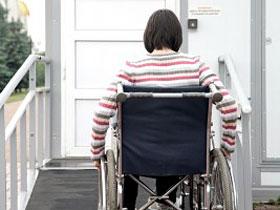


NIK checked how the state assists disabled persons in social and professional rehabilitation. The auditors had a closer look at rehabilitation stays in Kujawsko-Pomorskie Province and occupational therapy workshops in Wielkopolskie Province. In both cases it was verified how those forms of aid were organised and financed. The findings are alarming.
Rehabilitation stays have very little in common with actual rehabilitation. In fact they do not differ much from standard health resort treatment or recreational holidays. Their participants do not acquire new social skills which is the key objective of such stays. Their organisers leave out or limit the elements of rehabilitation which require cooperation and commitment. They do not provide qualified staff, they do not assess progress of individual participants. They organise cultural and educational meetings together with people from ordinary health resort stays. Additionally, the form of these meetings is questionable. An example is the Health Resort of the Polish Teachers’ Union in Ciechocinek where as part of such combined cultural and educational meetings, presentations of some goods for purchase were made, e.g. a ”magical glove” or a ”resonance bell”.
Poviat Family Support Centres qualify disabled persons to participate in rehabilitation stays illegally and inaccurately. Social workers refer people to rehabilitation stays only based on medical documentation which contains little information on social skills of a given person. As a result, rehabilitation stays are not always offered to the persons in need of social rehabilitation. Frequently, these are simply people needing treatment and recreation.
The Poviat Centres unequally treat participants when allocating grants for rehabilitation stays from the National Disabled Persons Rehabilitation Fund. According to NIK, they unjustifiably favour persons who simultaneously use the system EU funds (e.g. European Social Fund). They grant 100-percent funds to such candidates whereas others receive only 30 percent. A peculiar situation took place in the Municipal Family Support Centre (MOPR) in Włocławek, where participation in the EU system project was the pre-condition to subsidise the stay. Following that requirement, none of 386 moderately or severely disabled persons received support. It was given to 15 slightly disabled persons, though. The NIK auditors’ attention was also drawn to another alarming practice of some employees of the Centre. The ones who were responsible for allocating subsidies to Health Resort Panorama Morska [Sea Panorama], used its services free of charge or at lower prices. NIK negatively evaluated the work of MOPR in Włocławek and notified the Prosecutor’s Office of the irregularities.
Occupational therapy workshops do not prepare disabled persons for professional work. Therefore, they do not fulfil their elementary function for which they were established. From 2010 to 2012, only 7 in about 300 workshop participants (which makes about 2 percent) found a paid job. Most of them have taken part in workshops for many years (a record breaker for as many as 18). Workshops are therefore a way of spending time together or, in the best case scenario, of partially improving social relations.
The audit showed that the persons sent to occupational therapy workshops by adjudication teams had chance to use this form of help effectively as their health condition made it impossible to start work or even take up therapy. For instance, in 167 persons taking part in four workshops nearly 90 percent needed care or social support to lead normal life. According to NIK, the law needs to be changed to enable the workshop programme boards to influence the manner of recruiting participants and qualifying them for therapy. The Minister of Labour and Social Policy could introduce compulsory probation period for a potential workshop participant. That would allow to check and define psychophysical abilities of a candidate and his or her capacities to start a given job. The workshop programme boards should also decide on the forms of therapy and its completion in case of a participant’s confirmed incapacity for work. Then, the Council could send such persons to care centres which prepare people to lead life activity of a different kind. That would allow offering preparatory classes to persons whose health condition gives them hope to find a job.
NIK negatively evaluated personal data protection with regard to workshop participants. In none of them were the particularly sensitive data, that is the data on health condition, properly protected. An unacceptable situation occurred at three workshops which provided reports with detailed information on participants’ health to the Poviat Family Support Centres. NIK, considering the scale of negligence, submitted notification of a crime to the Prosecutor’s Office at all the seven audited workshops.
03 January 2013 14:14
Article informations
Udostępniający:
Najwyższa Izba Kontroli
Date of creation:
03 January 2013 14:14
Date of publication:
03 January 2013 14:14
Published by:
Andrzej Gaładyk
Date of last change:
03 January 2013 14:16
Last modified by:
Andrzej Gaładyk