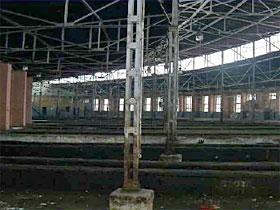


PKP SA has plenty of real estates and plots of land at its disposal which are redundant for the company operations. PKP SA could use the proceeds from rent or sale of those properties to repay its debt of about PLN 4-5 billion. The company’s activities in that respect were ineffective and insufficient, though. A great majority of the real estates which are no longer necessary for the company’s operations remain unused. Besides, PKP SA did not manage to rent more than 60 percent of the space of railway stations, not needed from the viewpoint of the passenger service.
Residential properties and plots of land, instead of helping the company recover from debt, became the source of additional costs. In the period 2009-2010 (until 30 September), the maintenance costs of the real properties designated for commercial purposes exceeded the revenue from their use by more than PLN 263 million.
The company had a problem with the commercial use of its property, mainly due to the unregulated legal status of part of railway real estates. In many cases the absence of the perpetual usufruct right made it impossible for PKP SA to act effectively. By the time of completing the audit, the company did not manage to finish the property inventory. The team that was supposed to do that, did not finish the works, although it existed for 4 years. That is why, the management board of PKP SA did not have full knowledge of which elements of its property could be subject to commercial use, and which ones should be transferred to other companies. NIK also stated that there were no clear principles of renting real states in PKP SA. That situation not only caused disorder but also was the potential source of corruption-prone mechanisms. NIK also criticised the instances of using railway real estates without any contract and the cases where PKP SA could not effectively recover rents from tenants. The company did not take any actions defined by internal procedures against the contracting parties that were in default. There were also cases where the existing tenants did not leave the occupied facilities despite the fact that the contract expired.
NIK also noted that too stiff regulations prevented a more effective use of the railway real estates. The law on commercialisation and privatisation of state-owned companies forced PKP SA to resort to tender procedures, also when it came down to selling unpopular real estates. As a consequence, in 1151 tender proceedings organised in the audited period, potential buyers made their tenders only in 150 cases.
A project of PKP SA to build a housing estate on a railway area in the centre of Warsaw also proved to be a failure. In that case the reason was the absence of the city’s land use plans concerning that particular area. That was the reason why the city refused to issue the decision on development terms, which was critical to start works.
PKP SA also suffered consequences of a few billion’s debt. In some cases the company did not have full right to use its real estates (sometimes very attractive from a business viewpoint), because the State Treasury established mortgages on them, securing its interests due to the guarantee of repayment of loans taken by PKP SA or redemption of bonds issued by that company.