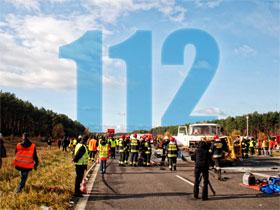


The emergency communication system (emergency phone number 112) is implemented against the law:
- emergency communication centres play the role of phone centres only - the emergency number operators working there accept emergency notifications and pass them on to relevant services. But they do not perform the dispatcher’s function (dispatching forces and managing rescue operations), although that was the core of the reform.
- there are still difficulties with electronic integration of the forms concerning incidents that are filled in by the operators with the forms of dispatchers from individual services. As a consequence, the dispatchers have to collect data on given incidents again.
- In line with the Fire Protection Act, the emergency communication system should be established at the poviat and province levels. In most provinces it exists only at the province level, without the joint governing body comprising the Commander-in-Chief of the State Fire Service and emergency medical services coordinator, as required by the Act.
- There are still delays in implementing telephone and computer-based solutions enabling relevant services to immediately receive information on the location of persons calling the emergency number 112. According to NIK, timely implementation of the full functionality of emergency communication centres (i.e. by the end of 2013) is unrealistic.
NIK also identified irregularities in the organisation of the National Fire and Rescue System (NFRS). The Minister of the Interior did not have valid information on firefighters’ equipment. Nearly 50 percent of the State Fire Service units being part of the NFRS could not take part in immediate rescue actions due to the deficit of permanent employees in the units.
The structure and organisation of the civil defence in Poland has been outdated for many years now. The number of its units is going down systematically. The number of people working there is also falling. Besides, the equipment used by these services is insufficient (e.g. the number of contamination removal sites is far too small) and obsolete, to make things worse. A lot of legal acts concerning the civil defence have expired in recent years. No new regulations were adopted in their place, though. According to NIK, in its present condition civil defence cannot help in removing consequences of natural disasters or protecting people in case of war.
NIK claims that the problems to set up a coherent civil protection system are mainly related to dispersed solutions concerning tasks and structures in different legal acts or to the absence of proper regulations. Crisis management plans and civil protection schemes are developed separately, although they deal with similar issues. The services’ competences and solutions adopted by them overlap. The Ministry of the Interior in cooperation with the Chief of the National Civil Defence have worked on a comprehensive Civil Protection Act since 2006. The works seem to have no end, though. According to NIK, a quick decision is needed on whether to transfer the civil defence tasks to rescue services operating on a daily basis. Especially that its present condition is really bad.