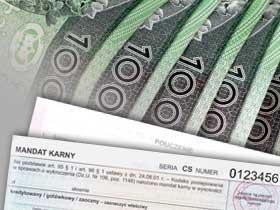


Only approx. 47 percent of amounts due for traffic tickets and administrative penalties comes from persons who paid them of their free will. Another 23 percent is enforced following enforcement proceedings. The remaining 30 percent is not enforced at all. It means that every third financial penalty in Poland is not enforced. In 2011, more than PLN 612 million was paid to the state budget due to traffic tickets. At the same time, arrears in the past years reached almost the same level, that is PLN 609 million.
NIK emphasises that the level of these arrears keeps rising. As compared with 2010, it is above 6 percent, or PLN 35.5 million. The audit results show that after two years from issuing the writ of enforcement not more than 2 percent of amounts covered by the writs are effectively enforced. This translates into lower inflows in provincial cash registers. Due to expiry of amounts due for penalty notices from January 2011 to June 2012 Mazowieckie Province lost more than PLN 28 million. At the same time the losses in Śląskie Province totalled PLN 18 million and in Pomorskie Province nearly PLN 14 million.
Growing arrears in traffic tickets and other penalties were caused among others by erroneous recording and accounting for traffic ticket forms and failure to meet the deadlines of issuing and transferring writs of enforcement to tax offices. In all the audited tax offices the first enforcement actions or proceedings were started only after 60 days from the date of filing the writ of enforcement by governors. That was among others an outcome of a growing number of cases and simultaneous staff limitations. According to NIK, the effects of negligence and sluggishness of tax and province offices have limited impact on effectiveness of debt collection.
The key problem in collecting debts is to get to the income and assets of penalised individuals. It pertains in particular to the persons who were handed a fine several times already, deliberately avoided payments and declared at the same time that they had no legal income. A consistent IT system would certainly help but it is under development yet.
NIK points out that effective regulations lack mechanisms that would motivate penalised persons to make timely payments. Amounts due expire after three years already and penal sanctions for the failure to pay a fine are not very painful - the costs of potential enforcement total about seven percent of amounts due. In these circumstances it is critical that public institutions provide actual levels of their debt collection costs, considering that more and more traffic tickets are imposed every year. Besides, there are no regulations that would limit benefits for the persons who avoid paying fines. E.g. nowadays, the drivers who have not paid a traffic ticket use the opportunity to cancel penalty points just like any other drivers. Therefore, withdrawing the cancellation of penalty points would be an effective motivator for drivers to pay their fines.