

Above PLN 10 million is paid to the state budget due to excise duty on alcohol products. It makes up one fifth of all excise duties. At the end of 2010, the existing arrears in that area were as much as PLN 1.2 billion. The NIK audit revealed that effectiveness of recoveries is very low in that case. In the audited customs chambers it was less than one percent on average. In extreme cases, for instance in the Customs Chamber in Przemyśl in 2010, not a single zloty was recovered from the amount due exceeding PLN 2.65 million. And in Poznań customs officers collected only PLN 95 thousand of more than PLN 99 million.
Also effectiveness of recovering excise duties in that area calculated by tax control offices needs to be improved. For one and a half year they managed to collect, based on tax assessment notices (determining the tax liability level) only PLN 20 thousand of PLN 14.3 million of levied tax. At the same time, as a result of post-audit decisions of the managers of customs offices, nearly PLN 184 million of PLN 338 million of due excise duty on alcohol products was recovered. Where does the difference come from? Directors of tax control offices issued tax assessment notices with regard to tax payers who were in default in the past years. The lapse of time helped some dishonest persons rid of their property and in many cases even wind up their business activity. On the other hand, the Customs Service screened current cases, where liabilities were defined towards the currently functioning entities.
The highest excise duty is imposed on ethyl alcohol (PLN 49.6 per one litre of 100% alcohol). Organised crime groups use contaminated spirit which is exempt from excise duty. They purify it, dilute and then sell as alcohol ready for consumption. Every year, as a result of that procedure, the State Treasury loses tens of PLN thousands. The Supreme Audit Office positively evaluates activities of the Minister of Finance aimed at cutting down this procedure. At his request the European Commission removed from the EU regulations one of acceptable contaminants (mixture of isopropyl alcohol and bitrex). According to the Customs Service, this is the substance that was most often used by crime groups to illegally bring alcohol to the market. Besides, at the turn of 2010/2011, the Minister of Finance crossed out five subsequent substances (e.g. butyl alcohol) from the list of agents admitted to contaminate ethyl alcohol. On that occasion NIK postulates developing an analysis of effectiveness of the valid legal and organisational provisions so that the trade in contaminated spirits may be prevented more effectively.
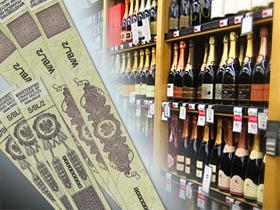
Customs officers systematically monitored threats related to contaminated alcohol trade. They also efficiently reviewed affixing excise marks on alcohol products in warehouses, shops, eating places and bazaars. In 2010, customs offices carried out nearly 23 thousand of such controls. Although it was nearly a half less than last year, the number of identified irregularities went up by one third (from 5484 in 2009 to 7388 in 2010). Customs officers were also successful in liquidating illegal alcohol purification and bottling plants. From 2008 to 2010, 84 such plants were detected, most of which were based in Łódzkie Province.
The NIK auditors point out that supervision of the trade in imported windscreen washer fluids and de-icing liquids was better than in previous years. It means that conclusions have been drawn from the recent NIK report which revealed that the customs officers from Przemyśl did not charge excise duty on the alcohol imported from Ukraine from 2003 to 2007. More than 94% alcohol was found in windscreen washer fluids. The State Treasury lost nearly PLN three billion because of that.
At the same time NIK indicates that customs officers do not fully use their new right which they were given at the beginning of 2010. It is related to the option of monitoring and recording potential crimes in public places. During the audit it turned out that the preparations to purchase essential equipment and conduct relevant training programmes are only pending.