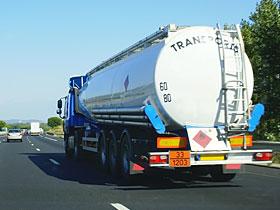


The Supreme Audit Office negatively evaluates the way the governors and province marshals exercised supervision over the transport of hazardous goods. The number of accidents and breakdowns during the transport of such substances went up on the roads from 220 in the year 2009 to 253 the following year. In the railway sector that count increased from 28 to 32 respectively.
These alarming statistics are influenced by many factors. The governors did not check how the fire service, road transport inspectorates and province marshals perform their tasks related to the safety of hazardous goods transport. They did not define any procedures ensuring cooperation and information flow between these units and their office. Because of that negligence, they did not have any data on the actual hazard level.
According to NIK, effective supervision of the road traffic management in Poland is not functioning. The province marshals when approving the traffic organisation projects, do not make any analyses of hazards posed by tankers and lorries with hazardous goods running on our roads. The transports are often made in rush hours, near the public utility buildings and ecological areas. Also the governors, do not introduce necessary constraints for the transport of hazardous materials although they have rights to do so. Moreover, on the area of six provinces (of eight audited) no special parking spaces were designated to remove the vehicles that are broken or dangerous
Many gaps and mistakes were identified also in the system for training drivers and advisors in the safety of hazardous goods transport. Since the province marshals exercise no supervision, the specialist courses for drivers are often conducted by companies that do not meet relevant requirements. As there is no central register of entrepreneurs running such training programmes, it may not be verified if the given company’s activity was banned in the past. In three road transport inspectorates (of four audited ones) the safety advisors were given empowerments with the breach of law. The role of advisors is significant because they oversee the preparation, dispatch and transport of hazardous materials on behalf of entrepreneurs.
As a result of the irregularities enumerated in the NIK report, the entrepreneurs, safety advisors and drivers are not adequately prepared to organise and conduct the transport of hazardous materials. The Road Transport Inspection which reviewed nearly 51 thousand vehicles transporting hazardous substances from 1 January 2009 to 30 June 2011, penalised more than 5 thousand drivers. The most frequent breaches included the drivers’ evasion of limitations related to driving times and obligatory breaks for rest, lack of fire protection equipment in vehicles, bad labelling of freights and lack of required certificates and transport documents.
NIK also identified some alarming negligence in the activity of the Office of Rail Transportation (ORT). The ORT President systematically decreased the number of audits related to the safety of transport of hazardous materials. In 2008, 107 inspections were carried out with the infrastructure administrators, carriers and users of railway sidings. Two years later it was only 68 although the number of transports with hazardous substances increased in that period. However, in nearly half of the audited field branches of the Office of Rail Transportation the inspectors in transporting such goods were the persons who had not completed any training programmes in that area.
The technical condition of the rail infrastructure managed by the company PKP Polskie Linie Kolejowe S.A. (Polish Railways) was also far from perfect. The audit of 93 rails designed for emergency shunting of wagons revealed that only two of them meet the requirements specified in the regulations. It also happens that such rails are situated in the vicinity of public utility facilities and do not have any protections securing the environment before the consequences of breakdowns of trains transporting hazardous materials.