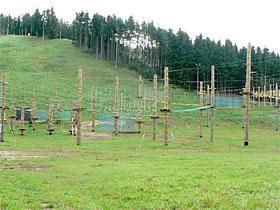


Since there are no local land use plans, most investments are erected at random, based on individual decisions. As a consequence, it is not the plans but the investors' proposals which determine the land shape. NIK recommends that local governments actively implement land development policy, for instance by drafting and implementing the planning documents as soon as possible.
Nearly 15 percent of land in Podlaskie Province is covered by local land use plans. In 10 municipalities audited by NIK it is even less - only 10 percent (more than 80 percent of their area is made up by various environment protection forms). However, 75 percent of these plans is outdated. They do not include existing constraints related to nature reserves or protected landscape areas. Also, according to these documents the Nature 2000 reserve does not exist. Also, in the majority of municipalities land use studies (planning documents providing the framework of the municipality land development policy and being the basis for local land use plans) are also outdated. This is a breach of the Land Use Planning Act and the Environment Protection Act.
Due to the absence of local land use plans investments are conducted based on individual decisions in response to individual investor's requests. As a consequence, it is not the comprehensive land use policy but the investors' proposals that determine the land shape. Besides, it leads to spatial chaos, degradation of natural values and may also hinder the location of future investments. NIK underlines that local land use plans are planning documents of a given municipality and they constitute acts of the local law which the municipality is obliged to observe and put into practice.
The NIK audit showed that the majority of municipalities (80 percent) cannot even say if their local plans and land use studies are up-to-date. The reason is that they neglect their duty to analyse changes in land development on their area (the Land Use Planning Act requires that such analyses are presented to the municipality council at least once in its term). The audited municipalities also do not evaluate progress in developing local plans. These analyses are the basis to assess the validity of plans and studies.
40 percent of the audited municipalities do not charge the so-called land use planning fee, which is obligatory under the Land Use Planning Act. This is a one-off fee due to an increase of the property value which should be collected from the owner in case the property is sold.
The NIK audit revealed that the county inspectors of construction supervision do not properly respond to the cases of construction lawlessness. In 114 administrative proceedings over a half of these proceedings were lengthy. Some inspectors failed to inform prosecution bodies about the construction lawlessness cases which required that. By doing so they infringed the Code of Criminal Proceedings.
In general, the county administrator's offices properly discharged their tasks related to the exclusion of land from agricultural production. Irregularities which included e.g. breaching the law in the process of issuing construction permits had no negative impact on natural values of the environmentally protected areas.
During that audit NIK identified cases in six municipalities where zoning approval was issued based on ordinances of the Governor of Podlaskie Province from 10 years ago (12 ordinances on Protected Landscape Areas of 25 February 2005). NIK emphasises that these regulations were developed based on the environmental and economic reality of the 80's and 90's of the last century and that they do not match present conditions. Therefore, the Provincial Assembly should pass new legal acts on the Protected Landscape Area as soon as possible.
NIK has commended that city mayors and municipality heads take the following measures:
- intensify works on developing new local land use plans;
- ensure compliance of land use studies and local plans with the provisions of the Land Use Planning Act and the Environment Protection Act;
- take immediate steps to make sure the fees due to an increase of the real estate value are accrued and collected.
The county inspectors of construction supervision should respond quickly and effectively to construction lawlessness.