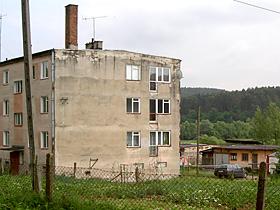


The technical condition of residential buildings remaining after liquidated state agricultural farms is getting worse and worse. Some of them even threaten the safety of their inhabitants. Nearly half of 150 buildings subject to the audit required a complex renovation. The repairs, though, do not improve the facilities’ overall technical condition as they are limited to fixing the most dangerous breakdowns or making sure the building does not collapse. Consequentially, more and more apartments have to be excluded from use, thus increasing the number of empty facilities. In 2010, they totalled as much as 11 percent. Within two years, the Agricultural Property Agency which is responsible for their management spent on them nearly PLN 4.4 million, without selling or liquidating vacant properties.
The inhabited buildings also bring losses. Their maintenance costs incurred by the Agency are higher than income from rents. In 2008, the Agency had to pay extra more than PLN 32 million and in 2009 it was nearly PLN 30 million. Worse still, tenants have huge arrears in paying rents (they reach above PLN 28.5 million). The administrators do not take any efforts to regain the money. Besides, in four cases the audit revealed that apartments were used without any agreement, which may suggest corruption.
Of nearly 337 thousand apartments remaining after liquidated State Agricultural Farms (PGRs) at the beginning of the 90’s, there are approximately 12 thousand facilities staying with the State Treasury Agricultural Real Estate. With the current rate of transferring flats, the Agency will not divest them for another dozen or so years. It is hard, though, to find someone interested in buying or taking over the premises. The communes and housing cooperatives are afraid of the buildings’ poor technical condition and potential trouble that the existing tenants may bring.
NIK points out that the Agency lacks full knowledge of the space of post-PGR apartments or their value. The reports of field branches are developed based on unreliable data. In 7 of 8 audited branches the auditors identified irregularities in records, including discrepancies as to the number, space and value of apartments. Those data differed even in individual agency units. The reason is poor work organisation in the branches and diffusion of responsibility among officials.
NIK takes note of poor supervision over housing management exercised by the Agency’s President Office. The Office did not audit that area at all, considering it not very significant as compared with other tasks performed by the Agency. Only the field branches conducted some audits in a very limited scope. However, the NIK audit revealed serious errors in the physical stock-taking made during the inventory of apartments. In 15 of 25 cases the administrators did not include buildings in the records, entered changes with delays or did not specify that the buildings were used against their purpose. Of such cases NIK notified on an on-going basis relevant law enforcement bodies, e.g.: Prosecutor’s Office, Tax Offices and Offices of Construction Supervision.