

The basic way of managing sewage sludge is to use it as organic fertiliser. Before that, though, it has to undergo special processing to lose its pathogenic potential. Any negligence of regulations in this case poses a threat to the environment.
NIK has negatively evaluated the way the sewage sludge has been used by the audited municipal sewage treatment plants[1]. The sludge was used almost in its entirety (more than 98 percent) but while doing so the plants repeatedly breached the law: Waste Management Act of 27 April 2001[2] and Ordinance of the Minister of Environment on municipal sewage sludge of 13 July 2010. Out of 36 audited entities dealing with sludge treatment, illegal actions were identified in as many as 32.
NIK auditors identified the following irregularities:
- as many as 90 percent of sewage treatment plants provided land users neither with credible sludge or soil tests, nor with information on possible sludge dosage. Over 13 percent of plants did no tests at all, whereas the quality of tests conducted by others did not guarantee proper protection of land before pollution. Moreover, the audit showed that more than 40 percent of audited sewage treatment plants applied sludge in forbidden places, e.g. in nature reserves, in developed areas, near water intake stations or at the time of vegetation of plants to be eaten by people;
- in most plants covered by the audit (63.9 percent) tests were conducted too rarely or on incorrectly taken samples. A half of 33 sewage treatment plants that used the sludge directly on the soil did not establish the maximum dosage (separately for each tested portion of sludge). As a consequence, a mix of tested and non-tested sludge was applied on the soil. Besides, precise sludge dosage was impossible as most sewage treatment plants had no weights. Such procedures create a risk of exceeding maximum sludge doses;
- in most sewage treatment plants (70 percent) the soil was tested against the norms. The tests were done many months before using the sludge or just after its use, instead of before applying the sludge each time. The testing samples were taken improperly; in some reports the method of generating them was not provided, although it was required statutorily. More than 13 percent of audited plants did not test some parts of land at all;
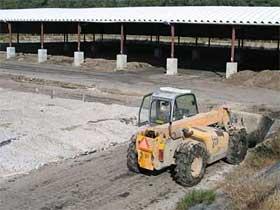
- nearly a half of sewage treatment plants stored the sludge in conditions potentially threatening for the environment (on non-consolidated or unroofed ground);
- almost 73 percent of sewage treatment plants incorrectly ran the register of sludge production and transfer. It did not include all data required by the law (e.g. concerning the content of sludge solids, organic substances, metals and parasites). The sludge transfer forms were missing as well. The province marshals unreliably verified the data authenticity, although they were obliged to do so by the Act. Hence, the databases used by the marshals and the Minister of Environment are not a credible source of information. The way of running them (e.g. over one-year delays in data input) makes them an ineffective tool to manage the environment. NIK also points out that provincial waste management systems in marshal offices do not comply with effective provisions of law.
Recommendations:
NIK recommends that the Minister of Environment implement mechanisms to ensure efficient waste management supervision:
- obliging sewage treatment plants to inform the municipality that they want to use the sludge on its land. To ensure proper dosage, the information should include the sludge weight, application site and results of the sludge and soil tests;
- specifying the term “each time” with reference to soil tests before applying sludge on that – to make sure the sludge is not used on the soil which after the tests underwent procedures changing the soil content (agrotechnical operations, such as fertilising, cropping);
- ensuring proper collection and functioning of provincial databases.
The use of a special composition of probiotic microorganisms is an example of a good practice. They make it possible to get rid of odours in a natural way. Moreover, microorganisms clean the sludge of pathogens and other hazardous substances. That method was presented during an experts panel at the beginning of the audit at NIK headquarters.
[1] The audit comprised 8 marshal offices and 36 organisational units (companies and municipal plants) using municipal sewage treatment plants in the period 2011 – 2012.
[2] On 14 December 2012, the Waste Management Act was passed (Journal of Laws of 2013, item 21 – effective as of 23 January 2013) which does not change the existing sludge management norms.