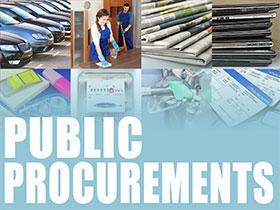


NIK evaluated activities of 13 public entities in terms of awarding public procurements for third party services. From 2012 to 2014 (first half), the entities covered by the NIK audit contracted about 14 thousand services worth over PLN 2.1 billion. The services contracted by the auditees usually included: cleaning, repair and maintenance services, IT and technical support, development of project documentation, legal counselling, restaurant services, catering, training programmes.
Public procurements for third party services were mostly awarded subject to effective provisions of law. Single irregularities were mainly related to the lack of full identification of services demand and unjustified division of contract which made it possible to award parts of the contract without applying the rules and procedures provided by the law (2 entities).
Only few institutions used their statutory right to select the best bid. In most cases the auditees used the lowest price as the only contract award criterion. Only in case of 60 contracts (about 2 percent of awarded ones) contract award criteria other than the lowest price were defined.
NIK also highlight an important aspect being the number of employees of the National Chamber of Appeals responsible for the review of appeals. By law the appeals should be reviewed by one person only. But the law also allows expanding the appeal review board to three persons if a given case is particularly complex or is a precedent (the Chamber Head is to decide which one is the case). From 2012-2014 (first half), nearly 5.4 thousand appeals were reviewed by one person only and only about 1.3 thousand cases by three persons.
According to NIK such provisions do not guarantee transparency of the appeal system. They do not ensure comprehensive or objective review of the matter, either. That is why, NIK is of the opinion that the law should be amended in this area and the appeal review board should consist at least of two persons. Besides, the complexity of a given case should not be decided upon by the President of the Chamber alone.
In case of most auditees NIK found that the organisation of planning and awarding procurements for third party services was ineffective. Admittedly, all the audited entities had their own internal regulations on awarding contracts (contracting services included) but only in half of them public procurement plans were made for a given year, covering all the planned services, regardless of their value. In other entities the plans covered contracts exceeding a specific value or were not developed at all.
Although the law does not clearly define the obligation to make public procurement plans, NIK says that to increase effectiveness and transparency of awarding contracts in the public sector but also to minimise the risk of corruption it is essential to obligate public institutions to make annual public procurement plans, regardless of the contract value.
Six entities (of nine where the plans were made) neither identified their real needs, nor made any cost/benefit analysis of procurements. They did not verify the legitimacy of the given contract, either. In most cases the purchase of a given service had to be justified only at the stage of the request submittal starting the contract award procedure.
Recommendations
Considering the audit results, the Supreme Audit Office has pointed out measures which could help improve effectiveness and transparency of the public procurement system as well as minimise the risk of corruption:
- make it obligatory for public entities to develop public procurement plans regardless of the contract value. Such plans would provide the entity heads with information on the number and value of planned contracts, deadlines and procedures of awarding them. These elements are essential to exercise good management control;
- to eliminate from the system solutions which allow public entities to divide contracts in parts and award them without applying the rules and procedures set out in the Public Procurement Law (e.g. Art. 6a of that Law);
- appeals filed with the National Chamber of Appeals should be reviewed by several persons, depending, e.g. on the contract threshold amount.
NIK also moves for amending Art. 13 of the Public Procurement Law concerning tender notices in order to make their publication obligatory. NIK stands in a position that tender notices let contractors prepare themselves properly for the tender. That is why, making the publication of tender notices a common practice would be beneficial both for the contracting authority and for the contractor. According to NIK it is also essential to further specify provisions of the Public Procurement Law: tender committee members should be assigned individualised tasks and responsibilities.