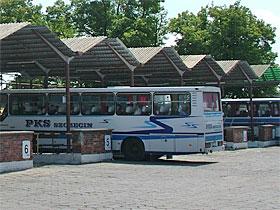


The obligation to organise regional bus transport lies with local governments. They should prevent the occurrence of pathologies in the road transport of passengers (e.g. overcrowded or undeveloped roads, poor technical condition of buses, unrealistic timetables). None of the institutions audited by NIK performed that task properly.

Regional bus transport
Local governments gave permits to passenger transport without making proper market analysis before. There was a cut-throat competition among the companies which excluded reliable bus carriers from the market. The ones who took over the routes, not always provided required comfort and safety to passengers. NIK has noted that the local governments when giving licences and permits to the companies, did not pay attention to the lack of basic documents concerning financial securities or technical condition of vehicles. Timetables were not verified, either. At the end of the day, even the timetables that forced drivers to run faster than allowed were accepted.
The local governments did not control entrepreneurs dealing with the passenger transport. If they did, the inspections were superficial. More than a half of district governments did not eliminate dishonest carriers from the market. Even after they learnt from the road traffic control authorities about serious breaches of licence terms, the carriers were not deprived of their rights.
Irregularities in the local governments, negligence of procedures and lack of proper supervision over the carriers had an adverse impact on their service level. The Road Transport Inspectorate (RTI), which cooperated with NIK on its audit, came across cases where vehicles other than buses were used in transport. Part of buses did not meet technical requirements. The timetables were not observed or even non-existent in some cases. Some carriers operated without required permits or licences. In many cases passengers were charged with undue fees. RTI confirmed an extreme example where the vehicles used for transport were in such a poor technical condition that it proved necessary to seize their vehicle registration cards. It was the case with every tenth bus.
Almost none of the local governments made sure that the bus carriers updated the timetables. They were updated neither at bus stops, nor in the institutions themselves. As a consequence, passengers had no access to reliable information and the office lacked data that was critical to assess the situation on the transport market, e.g. to decide on launching a new bus line.
In 75 percent of Marshall Offices there were mistakes in settlements related to statutory discounts on tickets. As a result of defective controls or their absence, additional payments were transferred to the carriers who did not comply with the requirements defined in the regulations.
According to NIK, most local governments were not prepared to organise regional bus transport. Responsible employees were either not qualified or overburdened with other duties. It happened that a single public official had to control a few hundred units dealing with the passenger transport, luggage transport, driving schools or vehicle inspection stations. Despite organisational difficulties, the local governments did not outsource any specialist tasks.