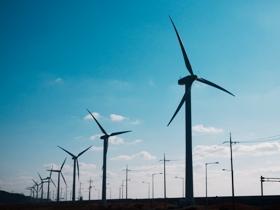


Renewable energy sources (or: renewables) - using e.g. the power of wind, solar radiation, river drops or energy obtained from biomass - are more and more popular in Poland. From 1 January 2008 to 31 March 2011 the President of the Energy Regulatory Office issued 418 licences to enterprises for the production of electrical energy with the use of renewables.
In 2010, the share of electrical power in the total electrical power consumption in Poland was nearly three times higher than in 2005. That increase occurred mainly in the period 2007-2010 and was related to the mechanism of the so-called ‘green certificates’ (guarantees of origin for electricity), encouraging enterprises to invest in renewable energy sources. The companies that resolve to use energy from renewables may expect numerous benefits, as e.g. 50 percent lower costs of connecting to the grid, priority in rendering services, exemption from licence fees, excise duty or fees for the guarantees of origin for electrical energy.
Poland promotes development of renewable energy sources e.g. by subsidy programmes for investors, offered by the National Fund of Environmental Protection and Water Management (NFOŚiGW). In this context NIK negatively evaluated efficiency and economy of actions taken by NFOŚiGW. The Fund improperly used funds coming from substitution fees and fines. According to the provisions of law, these funds should be allocated in total to support renewables. However, the Funds used less than 22 percent of the entire amount for that purpose (PLN 2.8 billion), mainly due to obligations arising from subsidy agreements and cash loan promises granted in 2008-2011. The funds actually paid for the development of renewables made up only 3.9 percent. Besides, the requirements for investors in that Programme were too strict. As a consequence, most subsidy applications were rejected. They were reviewed for too long and financial conditions were not attractive enough.
NFOŚiGW, as the beneficiary of substitution fees and fines in terms of renewable energy sources and environmental protection, did not check what amounts were paid on its account. It also did not control the recoverability of due fees and fines. On the other hand, the Minister of Environment did not exercise proper supervision of the activity of NFOŚiGW. It did not respond to the Fund’s low exposure of funds to support development of renewables. Only in 2011, new regulations were introduced, aiming at better finance management, reporting and the Fund planning process.
NIK positively evaluated activities of Provincial Funds of Environmental Protection and Water Management in terms of supporting renewables in the period 2008-2011. However, only 15 percent of the budget was used for financial aid for investors. It was the case because the applicants did not meet essential criteria or withdrew their applications due to abandoning the investment or obtained financial support somewhere else on more favourable terms. In some cases investors did not consider opinions and analyses that said it was impossible to build a wind power station on a given area due to the well-being of the environment.
The Minister of Economy properly performed most tasks related to renewables defined for the years 2008-2010. On the other hand, the works in the Ministry of Economy on new regulations defining the production of energy from renewables were delayed and were not finished at the audit completion date.
From 2008 to 2011, the Minister of Environment took numerous actions to promote development of renewable energy sources. He also supported non-governmental organisations in activities related to environmental protection. In the period 2008-2011, the total of 57 initiatives related to renewable energy sources were covered by the patronage of the Ministry of Environment. This Ministry e.g. introduced regulations related to the extraction of geothermal waters. A regulation was issued on the use of energy from burning municipal waste and guidelines were developed concerning the impact of wind power stations on the environment (including birds and bats).
Poland has been obliged to control energy consumption and to use energy from renewable sources by the EU and international regulations. In line with the EU regulations, by 2020 Poland should have the share in energy from renewable sources in the final gross energy consumption at the level of 15 percent.