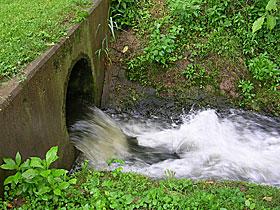


Every year, more than 2 billion m³ of water reaches Polish residents through waterworks. Out of that only 60 percent of used water is discharged back to the sewage treatment plant. The majority of the remaining wastewater is disposed straight into the environment. Only 3.4 percent of real properties not connected to the waterworks have backyard sewage plants. Others are equipped with holding tanks, which - as the NIK audit confirmed - are not emptied with sufficient frequency.
NIK points to several causes of the existing situation. None of the audited communes conducted effective supervision of the real estate owners, who are obliged to remove wastewater from holding tanks (a half of the communes did not run the records of the tanks and the backyard sewage plants, and every fifth one did it in a neglectful way). Most communes (71 percent) did not take any actions to enforce the removal of wastewater from residents, in line with the provisions of law. In every fifth commune the property owners received only requests to show agreements and payment slips for the wastewater removal. If any on-site audits were carried out the results of these actions were very poor. In case of revealing some irregularities, the commune officials or city guardians usually limited themselves to giving admonitions. They rarely started proceedings ending in a fine or a legal action. E.g. in Zielona Góra, in case of 126 real properties the lack of agreements was identified, 8 buildings had no sewage collection systems. Consequentially, 115 admonitions were issued, 10 fines were given and one legal action was started. Since the communes did not take any decisive measures , it became profitable to dispose sewage illegally into the environment. Each form of its legal removal entails some costs. The price of collecting 1 m³ of sewage through the sewage system was approximately PLN 6, whereas the wastewater removal with a gully emptier was PLN 12-40.
NIK also notes that the commune heads did not manage well the supervision of entrepreneurs who rendered the services of wastewater removal. In as many as 90 percent of audited communes the companies did not develop the lists of agreements for emptying of holding tanks and did not send them to the commune offices. In most communes (65 percent) some cases were identified where entrepreneurs did not provide the annual data on the amounts of collected wastewater. In these circumstances, the officials simply lacked indispensable information to properly manage the sewage system in their area. In practice, the communes did not arrange any substitute forms of the wastewater removal. The lack of adequate supervision of the companies intensified the risk of illegal discharge of sewage into the environment.
The communes managed better in terms of preparing the infrastructure for the waste collection and treatment. All of them took some actions to build or expand the sewage treatment plants. At the moment only half of them have the capacity to receive and treat the sewage produced in their area. However, in none of them was there any refusal identified of a sewage collection station to receive wastewater. Even small sewage treatment plants had some capacity reserves.
This situation may change, though, along with a more effective enforcement of the waste removal from the owners of real properties. Increasing the amounts of waste removed by gully emptiers may overburden the existing sewage treatment plants. NIK points out that in these circumstances it would be a good solution to expand the waterworks in the cities and at the same time provide additional financing to the construction of backyard sewage plants in the scattered housing areas. This is what was done in the Małomice commune (Lubuskie Province), where the number of people having no access to the sewage treatment plant (whether belonging to a commune or a house) went down within 2 years from 63 to 14 percent.