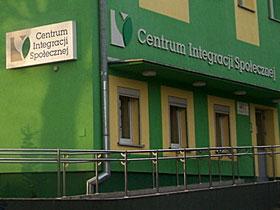


Social employment is a form of state support for the homeless, addicted, permanently unemployed, disabled and other persons who want to solve a difficult life situation and find a job. Having got a referral from a job centre they may take part in trainings organised by centres for social integration. The persons who signed a social contract may use the offer of social integration clubs. In the audited period, the number of centres and clubs in Poland was going up successively – in the middle of 2013 there were 124 and 197 of them respectively.
The audit showed that the majority of institutions for social integration operate legally but are not effective enough. In 2011-2012, out of 2 thousand participants of training programmes in the audited centres, 73.3 percent completed them and 38.2 percent became economically independent. It was even worse in the clubs: 81.1 percent of 2.2 thousand completed the trainings but only 16.9 percent achieved economic independence. Only some centres signed agreements with local entrepreneurs which gave their graduates an opportunity to have internship in a selected workplace. Few of those institutions cooperated with local job centres providing their charges access to training programmes and job offers. Despite those positive examples, general effectiveness of social integration institutions in terms of the number of economically independent graduates is insufficient, NIK says. The audit results reveal that local government centres were more effective than non-government institutions.
In the period 2011-2012, the local government centres reported 79.6 percent ratio of persons who completed training programmes with a positive result and 44 percent ratio of economically independent participants. At the same time, in non-government centres the ratios totalled 64.8 and 28.4 correspondingly.
In the course of NIK audit, the auditors identified the following irregularities:
- most centres did not monitor the fate of their graduates in a planned and systematic way. Their heads put it down to the lack of legal tools;
- majority of audited centres did not cooperate with local entrepreneurs and job centres to a sufficient degree which resulted in lower effectiveness of social support for the needy;
- in case of 31.2 percent of centres the social employment schemes were not adjusted to training participants in intellectual, personal and professional terms;
- in some cases participants were trained for surplus professions (e.g. Centre for Social Integration in Bystrzyca Kłodzka);
- a lot of social welfare centres leading clubs for social integration did not report them to the provincial register (or did that with delay), therefore breaching the statutory obligation set out in Art. 18 of the Social Employment Act.
NIK has also noted other gaps in the Social Employment Act, which:
- does not oblige centres and clubs for social integration to monitor the fate of their graduates. In practice, some institutions obtain those data informally. However, proper legislation in that matter would let the centres and clubs assess effectiveness of their activity and identify areas of improvement;
- does not authorise the governor to audit proper task performance and sound management of public funds by centres for social integration. The absence of such provision is a huge problem in the context of growing costs of social employment;
- Art. 11 sec. 3 of the Act says that one centre employee should not conduct a training for more than five persons. In practice that requirement is very difficult to comply with, mainly due to the lack of funds for new jobs (e.g. Centre for Social Integration in Chełmno);
- Art. 5 sec. 4 of the Act imposes an obligation on centres to inform the governor of each and every change based on which an institution was granted the centre status. The audit revealed that that provision was not observed in most cases (56.2 proc.), since the required data were too detailed and were changed too frequently.
NIK moved to the Minister of Labour and Social Policy to take steps to amend the Social Employment Act. According to NIK, the audit findings and results of the parallel audit dealing with effectiveness of the social contract show this is a good idea to integrate social contracts and social employment as two complementary tools. This solution will contribute to increased effectiveness of support for persons threatened with social exclusion.