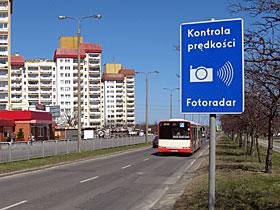


The GIRT selected locations for speed cameras in consultation with the Police and the General Directorate of National Roads and Motorways, based on detailed analyses concerning road traffic safety (number and causes of accidents, count of casualties and injured), as well as the condition of roads and public utility facilities (e.g. schools) requiring special preventive measures. The NIK audit revealed as well that the speed cameras covered by the audit (126 of 374 devices managed by GIRT) were installed and marked properly, in line with effective provisions. Most fixed speed cameras, operating in the system of automatic supervision over road transport (CANARD) (300 devices), were up and running from September 2012 to September 2013. However, their operation time was too short for a reliable evaluation of their effectiveness and impact on the road safety.
The NIK audit revealed, though, that the system of automatic supervision over road transport is not fully efficient. The key irregularities on part of the General Inspector of Road Transport confirmed by NIK concerned the following:
- not all violations related to high-speed driving were revealed because the thresholds in speed cameras were set at 15 km/h, or even 20 -25 km/h margins of error, whereas the maximum acceptable error margin set out in the Ordinance of the Minister of Transport, Construction and Maritime Economy of 14 March 2013 was 10 km/h.
Tolerating the margin of error of 15 to 25 km/h in some speed cameras is not only incompliant with effective law but also increases the risk of drivers speeding (which implies longer braking distance and higher accident risk).
- not all photos taken by speed cameras were processed. As a result the speeding drivers were not given fines (GIRT did not impose 72 thousand penalties worth about PLN 19.5 million) or received them with delays. Photos of cars with foreign number plates were particularly difficult for GIRT;
Source: NIK
- information on penalties imposed on speeding drivers was not passed on to the Police (in over 32 thousand cases). There were also significant delays in that area (even up to 200 days). In line with effective provisions, GIRT is obliged to inform the Police immediately to enable them to impose extra penalty points on traffic violators and take proper actions against drivers who have more than 20 and 24 points;
- deadlines for prosecution of over 11 thousand violations identified by GIRT were exceeded which ended in a failure to execute the state budget income of more than PLN 2.5 million (proceedings were completed without using sanctions).
NIK also drew attention to the problem with enforcing accountability for traffic violations committed by foreigners. Nearly 22 percent of all photos concerned cars registered abroad. Since there are no proper regulations or organisational solutions in that matter, most foreign drivers go unpunished and neglect the law binding in Poland.
According to NIK, most irregularities on part of GIRT are related to imprecise legal provisions, unfinished implementation of the CANARD system, deliberate prolongation of proceedings by speeding drivers. NIK also pointed out that GIRT informed its superior bodies (the ministries) of its problems, while taking remedy actions on its own. But despite numerous requests to the ministries, GIRT did not receive any tools to help enforce accountability of drivers violating traffic regulations.
With regard to identified irregularities NIK has given the following recommendations:
- to the President of the Council of Ministers to:
- to the Minister of Infrastructure and Development to:
- develop and implement mechanisms for effective prosecution of offences committed by foreigners;
- take actions to ensure coordination and cooperation of services and institutions performing tasks in the area of road traffic safety.
- take actions to ensure full efficiency of the system of automatic supervision over road transport (CANARD) by verifying provisions on enforcing accountability for traffic violations as well as to consider headcount increase in the General Inspectorate of Road Transport;
develop and implement communications strategy of building public awareness, e.g. in terms of dangers related to exceeding the permissible speed limit.