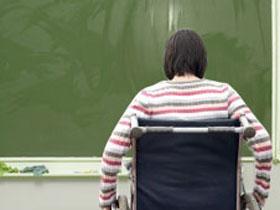


Poland ratified the Convention on the rights of disabled persons in 2012. It provides establishing a system of ”inclusive education” in public state schools. This system is to help pupils and students not only integrate with their non-disabled peers but also participate in the class community on equal terms, having the same rights and obligations. This solution is also less costly - an average monthly cost of educating a student in an integrated school is about one fifth lower than in a special school.
However, the Polish education system for persons with disabilities is based primarily on special schools. The audit showed that those schools were better prepared to work with disabled children. They have specialist staff and better equipment. Nevertheless, education in such schools is not that effective. It does not provide pupils and students with social skills that would help them function on their own in everyday life or join the labour market.
State schools which are to be the main place of ”inclusive education” are not properly prepared to work with disabled pupils and students having special educational needs. Most teachers do not have proper qualifications or experience in special education. They are also not convinced if this is a good idea. An anonymous survey of 1800 teachers shows that only 17 percent of them support the idea of integrating disabled pupils and students into the general education system. School principals often do not hire teachers specialising in special education. They justify their decisions by saying there are no vacancies or legal obligation to do so. Only 14 of 97 principals of state schools employed teachers with additional qualifications for their disabled pupils and students. The NIK audit in 40 schools revealed that in some of them the classes for pupils and students with disabilities recommended by public psychological and pedagogical counselling centres were limited or not conducted at all due to the lack of specialist staff. It was the case in 18 state schools with inclusive programme and in 4 special schools.
The lack of proper equipment and physical barriers are also a problem in state schools. In 12 schools, mobility-impaired children could not freely move around the building because of missing wheelchair ramps or lifts near the stairs. In 16 schools, the pupils and students did not have safe or hygienic learning conditions. In 26 schools, classrooms were not fully adapted for teaching of e.g. visually impaired children.
The majority of state schools with inclusive programme as well as special schools (32 in 40 audited schools which makes up 80 percent) properly organised one-on-one instruction and enabled their pupils and students to participate in the school life. In 12 schools, the auditors identified breaches of the regulations. Some of them had negative impact on pupils and students, e.g. the lack of proper psychological and pedagogical aid for children and their families (in seven schools), failure to develop individual educational and therapeutic programmes for each child (in two schools). These elements are essential to diagnose individual needs and provide adequate care to each pupil or student.
NIK appreciates measures taken by the Ministry of National Education to establish a proper education system for the disabled. The Ministry developed a package of organisational and legal changes which made it possible to implement the ”inclusive education”. It also prepared 489 leaders in the area of special education who then organised training programmes for school principals, teachers and local government officials Poland-wide. NIK points out, though, that in order to implement the Convention some organisational and legal changes need to be made in the first place. And that requires cooperation with the Ministry of Health and the Ministry of Labour and Social Policy.