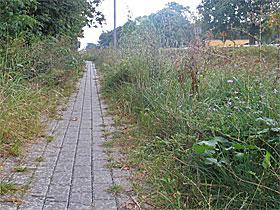


NIK negatively evaluates the condition of green spaces in the Mazowieckie Province. The auditors checked railway areas, roads, parks, squares and playgrounds. The audit revealed that green areas in the public space were severely neglected. In most locations the measures taken by local governments were insufficient. Some areas, mainly in the centres of the cities and towns, were duly kept. However, in nearly all of the audited communes the areas situated far from the city centres were very uncared for.
Instances of particularly grave negligence as regards green spaces and order occur along public roads and rail routes. The areas’ administrators provide different excuses for their idleness. They mention e.g. the need to keep natural conditions or put it straight that the care for green spaces is one of the lowest priorities on their action list. However, NIK points out that keeping these areas clean and tidy is important, at least because of foreign tourists and the image of Poland.
Two communes, Józefów and Serock, are excellent examples of how people should care about aesthetics of the public space and take advantage from that. Both towns concluded cooperation agreements with the Polish State Railways (PKP) and the roads administrator. The communes took on the burden of looking after green spaces along the roads, railways and stations and they built car parks on a part of railway areas instead.
A great majority of local governments are trying to oblige the owners of private premises to care for their green spaces. A half of the audited communes added to their regulations several points related to keeping green spaces clean (e.g. maintaining real properties free from weeds; mowing green lanes adjacent to the property; removing weeds, dried and mown grass, fallen leaves and broken twigs). The courts question such provisions, though. The Polish law does not provide for the possibility of defining obligations for the owners of private premises to care for green spaces. NIK points to the necessity of changing regulations so that it is possible to pursue order and tidiness. The auditors had no problems finding places where litter, old furniture or used white goods had been lying for a long time. Only one of the Warsaw districts, Włochy, spent PLN 108 thousand on the fight with this rubbish within 8 months in the past year.
The NIK report shows that the aesthetics and tidiness of communal areas do not depend directly on the level of financial outlays. Some communes were very highly evaluated although the cost of maintaining green spaces was much lower in their case than the average (it reached PLN 4.8 thousand per hectare). With the communes that received the highest grades the cost of maintaining one hectare ranged from PLN 1.6 thousand (Siedlce) to PLN 21.3 thousand (Józefów). In case of communes that were given the lowest grades for the maintenance of public areas, expenditures for that purpose ranged from PLN 0.3 thousand (Sulejówek) to PLN 8.4 thousand (Piaseczno).
As an example of good practice, NIK mentions maintenance of tidiness and order by the communes using the so-called public works and intervention works. Compensation and insurance of employees hired in that way are covered from the Labour Fund. However only four communes used that opportunity (Siedlce, Lesznowola, Serock, Teresin).