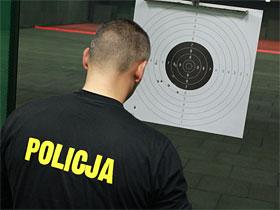


NIK has investigated recruitment and training of newly hired officers in the Internal Security Agency, Central Anticorruption Bureau, Police and Border Guard. NIK stands in a position that the present recruitment system guarantees selection of the best candidates.
Statement of President of NIK Jacek Jezierski
Recruitment system in the special forces
With regard to the service requirements as well as safety and security of officers, NIK supports the principle of identical physical ability tests for both male and female candidates for the Police (irrespective of the sex). However, the rule of equal requirements towards men and women is breached immediately after hiring a candidate: requirements towards active Police officers are determined by their age and sex. As stated by NIK, the only acceptable difference in assessing physical ability of the Police officers can be related to the nature of their job and occupied position.
Interview with Marek Bieńkowski from the Department of Public Order and Internal Security of NIK
Recruitment system in the special forces (interview)
NIK’s reservations are related to some tests carried out in the process of recruitment for the service. The Central Anticorruption Bureau and Internal Security Agency applied additional tests (e.g. polygraph or ”lie detector”) with all candidates, although the regulations allow using them only with some positions which require special skills. The Polish SAI does not question usefulness and legitimacy of any tests (including the ”lie detector”), allowing verification of candidates, but they have to be defined by the law first.
The issue of statutory requirements for the service candidates has to be solved too. Although activities of different formations are similar in many ways, these requirements differ significantly. For instance, the provisions of the Act on the Police and Border Guard exclude persons sentenced for a crime (also unintentional), whereas the Central Anticorruption Bureau Act excludes only persons sentenced for an intentional crime and the Internal Security Agency Act does not provide for that requirement at all. The Police candidates are still obliged to do the compulsory military service, although in February 2009 it was abolished.
The most alarming fact for the Supreme Audit Office is that after properly organised basic training programmes for freshmen, further training cycle for officers is actually accidental and does not follow a planned career path. In the Police, Border Guard and all specialist forces the training system needs to be modernised and expanded. NIK has confirmed underinvestment in that regard and consequential problems with the training base.
The training base of the Police and Border Guard makes it possible to provide elementary training to all adepts. In-service training, though, is provided in a limited scope. On average, the Police manage to organise approx. 60 percent of essential training programmes per year, although the schools’ capacity is much bigger (e.g. in 2011 it was used only in 25 percent). As for the Central Anticorruption Bureau, until the audit completion date it neither established its own training centre nor had a permanent access to the base of other services, despite problems with the specialist training for officers. NIK stands in a position that even experienced officers of the Police, Border Guard and other services (including the Central Anticorruption Bureau), should be subject to in-service training. One of the reasons are changes in the legal system, not to mention many new phenomena in the area covered by the scope of tasks of individual forces.