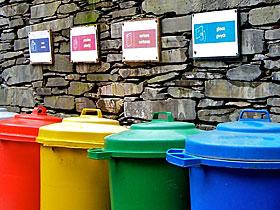


The new municipal waste management system has been effective since 1 July 2013, after the amended Waste Management Act came in to force. Following the change of law, municipalities acquired obligations of real estate managers in terms of waste management. The amendment was to improve the waste management system, ensure recycling on a larger scale and reduce the amount of particularly biodegradable waste sent to landfills.
The NIK audit revealed the following irregularities:
- nearly a half of audited municipalities neither created selective waste collection points (inhabitants would be able to deliver there a given type of waste to be collected free of charge), nor specified places where people could leave their used electric or electronic equipment at any time free of charge. Some municipalities organised selective waste collection e.g. twice a year. According to NIK, such measures do not ensure efficient waste disposal and are incompliant with the Act.
- a half of municipalities did not provide on websites (or in any other customary manner) information important for their inhabitants, e.g. on the points of selective municipal waste collection, used electronic equipment collection or on companies collecting municipal waste from real estate owners. As a consequence, more than 16 percent of surveyed inhabitants assessed the municipalities’ information activities as insufficient.
- over a half of audited municipalities did not adopt the resolution on the conditions and manner of submitting declarations electronically.
- nearly 30 percent of municipalities did not fully meet the obligation to make the yearly municipal waste management review. That is why, they lacked data to develop a reliable tender specification.
- one municipality ordered waste collection to a local government budget plant – against the Public Procurement Act. The municipality head explained he did that based on the opinion of the Sejm Bureau of Research. NIK claims, though, that in the light of the Act, tender procedure should be observed in each and every case. Although there were few similar cases all around Poland (the Ministry of Environment says it was the case in 17 of 2500 Polish municipalities), NIK resolved that that the law on that matter needs to be more precise.
- new provisions obliged real estate owners to submit declarations every time the municipality council accepts new waste management fees. This procedure creates unnecessary burden for inhabitants and for local government employees who unnecessarily repeat their activities. NIK believes that the new law was redundant in that case.
- the audit results and numerous parliamentary questions show there is an issue with establishing if housing cooperatives and communities should be treated as real estate owners. According to NIK, based on the “real estate owner” definition in the amended Act it is hard to say exactly who is to place declarations and pay waste management fees. NIK stands in the position that the law should be tightened in this case.
Therefore, NIK moved to the Council of Ministers to take legislative initiative to:
- further specify the form and deadline for making the annual municipal waste management review;
- indicate that the real estate owner will not be obliged to submit a new declaration on waste management fee every time the municipality council changes the fees;
- clearly define the term "real estate owner";
- make sure the Act specifies precisely if the transfer of municipal waste to local government budget plants is legal or not;
- make sure the statutes resolve the issue of supervision over waste management resolutions passed by municipality councils (it should be made clear which authority should control their legality).
NIK recommends that municipalities use family allowance systems, e.g. lower fees for large families. Only 6 of audited municipalities proposed such allowances.
In 2014, NIK is going to check how often municipalities arrange waste collection and if they prevent waste contamination of non-inhabited areas. The Polish SAI will have a closer look at waste management tenders.