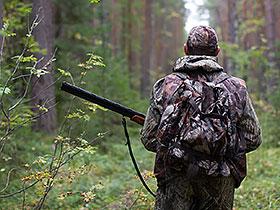


By law there is no authority to supervise or audit the Polish Hunting Association. The Environment Minister’s activity is limited to less important matters (such as participation in complaint proceedings). There is no body in place to audit the activity of hunting agencies which mainly organise hunting for foreign hunters. The activities of province marshals boiled down to accepting and sporadically checking documents submitted by the agencies.
The wildlife management audit conducted by NIK revealed a range of significant irregularities at all stages of wildlife management, both in terms of its organisation and implementation. NIK’s most serious objections are related to disorder in the hunting documentation which made it impossible to establish the actual status and the number of harvested animals.
It is extremely important that the plans are reliable as they are actually the only document providing information on the animals’ status, actions planned and taken in the previous season in all hunting districts. However, the hunting documentation was negatively evaluated by NIK, especially the data shown in yearly hunting plans. Moreover, it was very often the case that hunting plans were not met, first of all as regards wild boars and small game. The hunters said they did not meet the plans for objective reasons or because they had poor shooting abilities.
The comparative analysis of data on hunting animals listed in the plans and data from the source documentation revealed considerable discrepancies. It happened that the number of harvested animals specified in the register of hunting licences, or individual and collective hunting records differed from the count shown in yearly plans.
The audit also revealed a range of irregularities in documenting the course of hunting. In some cases individual hunting licences were not returned, animals were shot based on hunting licences granted for other persons or the licences included animals caught in other districts. In some cases the scope of once granted hunting licences was extended into additional species and other animals (from a few to a few tens of animals in the season in one district only). According to NIK such activities fall under the name of poaching.
In some of the hunting districts hunting was permitted for the whole hunting season based on one licence only: the licence was granted with the first validity date through 31 December of the given year and then it was extended to 31 March of the following year.
In part of audited forest districts and hunting clubs no documentation was kept that would allow checking if the hunters have proper licences, including the gun licence. In line with explanations given, national hunters were screened before they received the licence, whereas in case of foreign hunters the screening was made by hunting agencies where the hunting was bought. NIK has not established if the licences were verified by the agencies or not. It points out, though, that the act does not define such obligation. There is a law, however, which provides penal sanctions for granting the hunting licence to a non-eligible person. That is why, it seems justified to document the verification.
Non-profitability of wildlife management in some areas is questionable. The audit results show that the way and scope of recording revenue and expenditures often provide a misleading picture of the financial standing of wildlife management. The audited units classified costs differently which makes it impossible to compare profits and losses among individual hunting districts. At the same time, all lessors and managers of those districts were running highly independent financial policy (e.g. they established hunting price lists on their own).
Compensation amounts for damages in crops and produce, caused by game, were often paid with delay. The delays ranged from several days to even a dozen or so months but none of the auditees paid interest for delay in compensation payments. The damages in crops were recorded every year in the area of not more than 1 percent of audited hunting districts. NIK has noted that the effective law allows offering compensation only for damages in crops and produce, thus discriminating the owners of other properties, such as forests.
Conclusions and recommendations
According to NIK, one of the most urgent issues is to agree on the way of defining hunting districts and reduce hunting on private lands. The provisions binding at that time were considered inconsistent with the Constitution of Poland and will become invalid in January 2016. The Constitutional Tribunal stands in the position that the effective law, which makes it possible to establish hunting districts on private lands, does not properly protect the rights of property owners.
The law changes, which are being worked on in line with the Tribunal’s ruling, are only a drop in the ocean of issues that need to be sorted out. According to NIK it would be rational to amend the act also in terms of issues addressed in the audit. NIK recommends first of all empowering the Minister of Environment to supervise and audit the Polish Hunting Association.
It is also important to specify precisely the lease rent basis for all hunting districts and provide regulations to compensate for damages inflicted by animals in private forests.
It is also recommended that the reporting of all hunting districts be standardised.