

Audit no. P/24/096/KNO
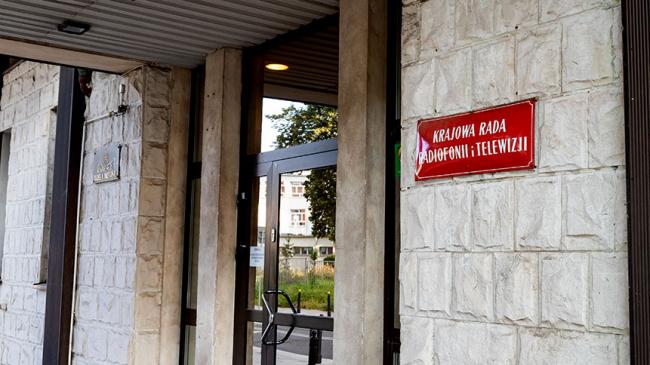
National Broadcasting Council
The National Broadcasting Council (KRRiT) is a constitutional law enforcement agency which upholds the law, the right to information and public interest in radio and TV broadcasting.
NIK has negatively evaluated lengthiness of proceedings conducted by the National Broadcasting Council on granting licences to broadcast programmes for another period (in extreme cases the proceedings lasted 19 and 22 months). In some cases the KRRiT Chair issued decisions on granting licences 2-3 days before the previous licence expired. Administrative courts passed three judgements, including two valid ones, stating that the KRRiT Chair remained inactive, which was in gross violation of law.
Every year the National Broadcasting Council passed resolutions where it determined (until 30 September of the previous year) the method of distributing proceeds from licence fees for 2016-2024. In 2016-2023, the KRRiT Chair transferred over PLN 6.29 billion to 19 public broadcasting units to pursue the public mission.
NIK has negatively evaluated the KRRiT Chair’s failure to transfer funds from licence fee proceeds in the first half of 2024, contrary to the Licence Fee Act. Instead of public broadcasting entities, the KRRiT Chair transferred over PLN 337 million to the court deposit. NIK has prepared a report on possible criminal activity in that case concerning the excess of powers or non-compliance with duties by public officers.
NIK has negatively assessed the procedure and the manner of registering and reviewing claims and complaints received by the National Broadcasting Council. Although the KRRiT Chair took actions in the cases which the claims and complaints dealt with, he reviewed them without regard to the provisions of the Code of Administrative Proceedings applicable to him as a state authority.
The findings of the audit show that for over 2.5 years (from November 2021 to June 2024) the National Broadcasting Council did not run a contact point to provide information and receive complaints on issues related to the accessibility of media services for people with sight and hearing disabilities (that was a task set out in the RTV Act).
In 2016-2024 (first half), the KRRiT Chair issued 304 decisions imposing fines for violating the RTV Act totalling over PLN 7 million.
NIK has negatively assessed the enforcement of fines imposed by the KRRiT Chair on two broadcasters, although the decisions to impose fines were not valid as the penalised parties appealed against them with the District Court in Warsaw – economic court.
It needs to be reminded that in the audit: Functioning of selected entities of the public finance sector performing analytical, advisory, expert and research tasks, NIK examined the activities of the National Media Institute (KIM), which was established among others to coordinate and carry out activities in the area of telemetry. NIK has negatively evaluated KIM’s activities in all the audited areas.
In 2020-2024 (first half), the National Broadcasting Council spent a total of over PLN 118 million to found the National Media Institute and implement tasks commissioned by this facility. In addition, the National Broadcasting Council spent over PLN 46 million in 2018-2022 to implement the "Polish Telemetry" Project.
National Media Council
The National Media Council is a competent body in matters of appointing and dismissing members of the governing bodies of public broadcasting entities and the Polish Press Agency, as well as in other matters specified in the Act.
The Chancellery of the Sejm provided administrative and organisational services to RMN, and also covered costs related to its operation and service in 2016-2024 (until 30 June) which exceeded PLN 8.9 million. It should be noted that the Chancellery of the Sejm unreliably planned the costs of the RMN's operation in 2017-2023.
NIK has noted that the said funds were spent from the state budget due to establishing a new entity (i.e. RMN) under the Act and assigning it tasks that until 31 December 2015 were the responsibility of the National Broadcasting Council. In this context, the Constitutional Tribunal in its judgment of 13 December 2016 stated that specified provisions of the amending Act were unconstitutional. The Tribunal referred to the provisions which deprived the National Broadcasting Council of any influence on the manner in which the governing bodies of public broadcasting companies were appointed and which excluded KRRiT’s substantive participation in the procedure of changing statutes of those companies. The Tribunal's judgment has not yet been implemented.
In addition, it was found, for instance, that RMN admitted an unqualified person to the second stage of the competition for the position of the President of the Management Board of Telewizja Polska S.A. Also, RMN did not require candidates for members of supervisory boards of public broadcasting companies to document their compliance with the requirements set out in the Act on the Principles of State Property Management.
Recommendations
NIK addressed the Minister of Culture and National Heritage with a recommendation to consider including amendments to the RTV Act in the ongoing legislative work on this Act in the following areas:
- setting deadlines for the National Broadcasting Council to settle the procedure for granting a licence to broadcast the programme and for the KRRiT Chair to issue a decision in this matter;
- deleting a provision of the RTV Act which obliges the National Broadcasting Council to submit to the European Commission a report on applying measures by video-sharing platform providers against the sharing of content referred to in the RTV Act, considering that the relevant EU regulations do not impose such an obligation on the EU Member States;
- regulating the issue of monitoring/controlling the correctness and reliability of performing statutory obligations by obliged entities in order to ensure completeness and timeliness of the lists kept by the Chairman of the National Broadcasting Council;
- modifying the method of communicating the announcement of the possibility of obtaining a licence by resigning from publishing such information in two printed nationwide dailies, as referred to in the RTV Act.
NIK also addressed a recommendation to the National Broadcasting Council to ensure reliable implementation of the recommendations and observations listed in the post-audit statement, including as follows:
- conducting proceedings and making decisions on granting licences to broadcast programmes for another period without undue delay;
- compliance in the course of administrative proceedings (to the extent not regulated by the RTV Act) with the procedure and principles set out in the Code of Administrative Proceedings;
- register and review claims and complaints received by the National Broadcasting Council in a correct and reliable manner;
- consider legitimacy of carrying out the task specified in the RTV Act, i.e. to organise research of the content and reception of media services and video-sharing platforms, via the National Media Institute, due to the amount of expenditure incurred by the National Broadcasting Council for this purpose.