

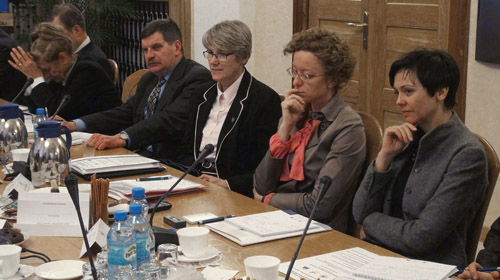
When the concept of management control was introduced along with the reform of public finance in 2009 it was a sign of a broader change in people’s thinking about administration. This tool was to help public institutions in becoming more goal- and result-oriented. ”Three years have passed since new regulations were implemented. This is a good moment to sum up the functioning of management control in the Polish administration” - said President of NIK, Jacek Jezierski, starting a debate organised by the Supreme Audit Office.
Successes and failures of management control in Poland
Management control
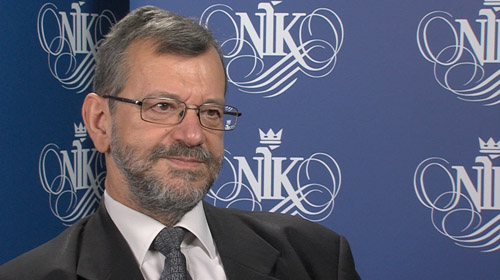
According to Józef Płoskonka, officials have not managed to effectively implement the new management concept. ”Polish public institutions are still inefficient.” - claimed the Advisor to the President of NIK. ”That means that management control simply doesn’t work in the shape conceived by the initiators”.
It is confirmed by two large audits of NIK conducted at the local and central government levels. Both of them reveal that management control has got bureaucratised and formalised in no time. Instead of unleashing officials’ creativity or boosting their effectiveness, it has come down to an obligation to prepare extra documents which usually did not translate into better functioning of an institution.
Why was it the case? Wiesław Kurzyca from NIK pointed to the way of implementing management control. ”It’s about implementing a big strategic change. Its participants need to be convinced and prepared for that. But first of all, they have to know what it is about” - explained the Advisor to the President of NIK. In his opinion, all those elements were missing when the new management concept was being implemented in the public administration. As a result, unprepared, unconvinced and confused officials became its opponents at the very beginning.
Prof. Krystyna Lisiecka from the University of Economics in Katowice indicated some problems with precise understanding of what management control actually is. ”The Act does not identify management control with the management system. But if we take a closer look at this concept, it has all classical features of that system” - said Lisiecka. And she claimed it would be a good idea to make it clear what management control really stands for. ”Let’s call a spade a spade so that each official, each commune head know what they have to do with. As for me, I think that it’s simply a system of managing public institutions.”
Interview with Józef Płoskonka about the essence of management control
Management control 2
Prof. Artur Nowak-Far from the Warsaw School of Economics stressed that each of the EU countries came across some problems while implementing management control in the public administration. One of them is e.g. the lack of a clearly defined responsibility for particular objectives in the given state. ”The British solved that problem by introducing a system of agreements concluded by the heads of public institutions with their superiors. Even ministers sign agreements with the Prime Minister. It helped to define ownership of each element of the task process in that country. At a later stage, each owner was evaluated based on his or her performance” - reported Nowak-Far. The Professor pointed out that each country had to find its own way of how to effectively implement management control.
Representatives of the Ministry of Finance which coordinates implementation of management control in Poland agreed that the new concept of management control got bureaucratised and did not materially translate into efficient administration of public institutions. ”But it has proven successful in many ways” - said Urszula Sojka. ”First of all, we’ve managed to switch the thinking of public institutions into goal-orientation. Now we have to think together how to improve the system to make it effective.
According to Agnieszka Giebel, cooperation between the Ministry of Finance and Supreme Audit Office may be the key to efficient coordination of management control in Poland. ”NIK has the resources and tools to promote its activity and explain it to officials what the new management concept really is about”
- said the director of the Department of Audit of Public Finance Sector. She was supported by Danuta Rosińska from the Chancellery of the Prime Minister. ”NIK should promote management control in Poland. This is an added value that this institution may contribute to our public administration.”
The debate participants agreed that we all were still learning management control. Vice-President of NIK Marian Cichosz admitted that was also a big challenge for NIK. ”We want to audit the management system in the public administration in a way that would make officials understand that it’s not about creating new documents but about achieving concrete results.”
![Successes and failures of the management audit – debate at NIK [reportage]](/plik/big/id,4431.jpg "© iStock")