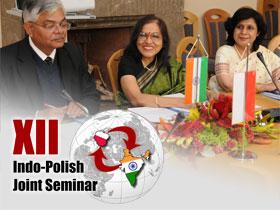


Every year, Supreme Audit Institutions (SAIs) all over the world produce hundreds of audit reports showing how government administrations operate - what works properly and what requires some improvement. One of SAIs’ main objectives is to communicate their audit findings to the public opinion effectively. Nowadays, modern and effective communication is not possible without the media, which have a special status in a democratic society. NIK representatives together with their colleagues from the Office of the Comptroller and Auditor General of India (CAG) debated on these topics during their 12th meeting in Warsaw.
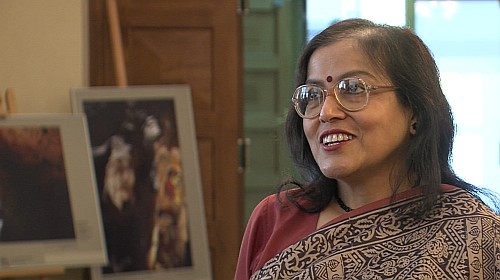
SAI of India
The media policies of both institutions have the same objectives, although there are some cultural differences between them. Both SAIs want to be reliable in communicating their audit results. Citizens’ access to information is a foundation of democracy, that is why it is vital to present audit findings in the media, which can reach millions of people. Poland and India, however, differ a little when it comes to the tools and ways used to inform the public opinion on audit results. For example, the CAG of India issues summaries of its reports in the form of small booklets of a very attractive design. The main audit findings are presented there in a simplified way. NIK representatives discussed press releases they prepare, electronic ways of communication with journalists, and a special internet platform, where journalists can obtain video and audio materials on the NIK’s work.
The second part of the 12th Indo-Polish Joint Seminar was devoted to discussing internet and intranet tools used by the two audit institutions. The employees of the NIK’s Press Office presented the new features of the NIK’s web page and special IT programmes supporting auditors’ work. While CAG representatives showed their Polish colleagues some IT tools used by their audit office.
The NIK and the CAG of India have been cooperating since 1999. In 2000, the two institutions signed an agreement on mutual cooperation, whose main objectives include improvement of audit methodology and exchange of information in the area of public finances auditing. Over the last few years, representatives of the two SAIs have met several times at joint seminars and discussed, among others, auditing of the banking and social insurance sectors, as well as IT tools used by auditors.